As an Amazon Associate, we earn from qualifying purchases. Some links on this site are affiliate links at no extra cost to you. Our recommendations are based on thorough research and editorial judgment.


How to Size a Mirror for Your Vanity Width and Height

To properly size a mirror for a vanity, one must first calculate the width, aiming for 70-80% of the vanity’s width with 1-2 inches of space on each side. For height, the mirror should sit 5-10 inches above the vanity and measure at least ⅔ of its height, typically resulting in a range of 30-34 inches. Additionally, considering various styles, such as frameless or ornate designs, can enhance the bathroom’s overall appearance and functionality. Further insights on specific styles and placements are available.
Key Takeaways
- Mirrors should be 70-80% of the vanity width, with 1-2 inches of space on each side for balance.
- Aim for mirrors that are at least ⅔ the height of the vanity, typically between 30-34 inches.
- Position mirrors 5-10 inches above the vanity for optimal viewing and clearance for lighting.
- For double vanities, align mirrors with each sink, maintaining a 4-6 inch gap between them.
- Consider mirror shapes and frames that complement your vanity style and ensure safety features if children are present.
Determining the Ideal Mirror Width
When determining the ideal width for a bathroom mirror, several factors play an important role in achieving both functionality and aesthetic balance. A significant guideline suggests that the mirror width should be 70-80% of the vanity width, allowing for a proportionate space that enhances visual harmony. Typically, ensuring a distance of 1-2 inches on either side creates a balanced and visually appealing look. For double vanities, each mirror should align with its respective sink but not exceed the total vanity width. Additionally, when measuring the width, one must consider any larger frames that may increase the overall bathroom mirror size, ensuring that the total width complements the available wall space without making the area feel cramped or cluttered. Many mirrors come with shatterproof glass, which enhances safety and minimizes risks if breakage occurs.
Recommended Products
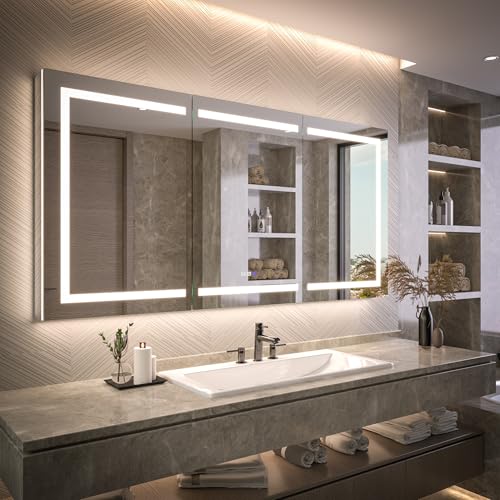
💡 Advanced Lighting - Experience full control over your lighting with front and back LED strips offering seamless dimming and a wide range of adjustable color temperatures (3000K-6000K). The LEDs are designed to last over 50,000 hours, ensuring long-lasting performance. The built-in motion-sensing night light and automatic interior lighting (activated when the doors open) provide both convenience and security. Plus, the lighting memory function remembers your last brightness and color settings, ensuring consistent lighting every time

💡【Edge-Lit Innovation Full Mirror Premium Glow】Unlike central-strip designs that reduce usable mirror area, our outer-edge sandblasted frosted LED strip maximizes mirror space for clear, unobstructed grooming. More decorative than lamp-shaded styles, it maintains elegant aesthetics when lit or off. To address the common dimness issue in sandblasted strips, we widened it to 1 inch—delivering both premium aesthetics and bright, cozy bathroom lighting in one.

[Colors Changeable & Brightness Dimmable] You can easily switch between color temperatures like 3000K for warm light, 4000K for neutral light, and 6000K for white light, adapting to various conditions. You can also adjust the brightness to your comfort level.
Guidelines for Mirror Height

Selecting the correct height for a bathroom mirror is crucial not only for functional tasks, such as grooming or applying makeup, but also for enhancing the overall aesthetic of the space. The ideal height for a mirror should be positioned about 5 to 10 inches above the vanity to guarantee maximum functionality and visual appeal. A well-placed mirror generally measures at least ⅔ the height of the vanity to maintain visual balance. For standard ceilings around 8 feet tall, the typical mirror height ranges from 30 to 34 inches. Additionally, one should take into account the average eye level of the primary users, making certain there is sufficient clearance above the mirror for lighting or shelves to avoid obstructing visibility and functionality. Many modern LED bathroom mirrors come with anti-fog technology to ensure clarity even after steamy showers, which enhances both practicality and experience.
Recommended Products

Modern Design and Ample Storage: This stylish bathroom vanity boasts a contemporary floating design that saves floor space and adds a clean, minimalist look. Its double-sink bathroom vanity configuration includes multiple drawers and cabinets, providing generous storage to keep your bathroom organized and clutter-free.
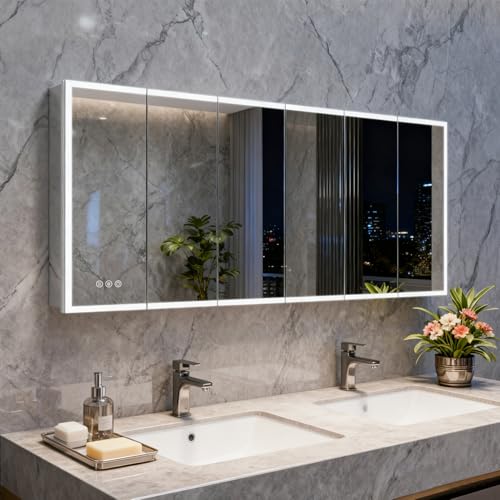
Adjustable Illumination Features: GUIQIYANG Medicine cabinet is equipped with customizable light intensity, enabling you to create the ideal ambiance for any hour of the day. Select from three distinct color temperatures—cool white, natural white, and warm yellow—allowing you to fine-tune your lighting to meet your preferences.
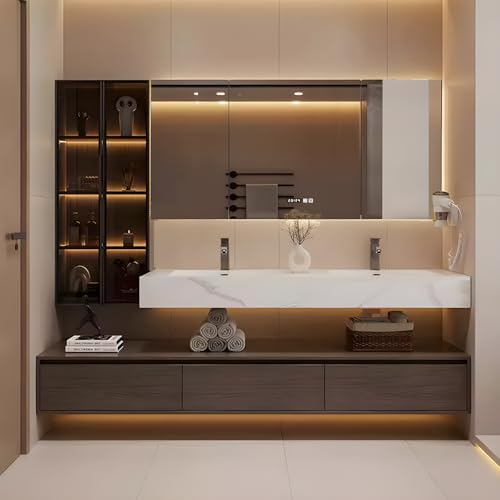
✅ SMART LED ANTI-FOG MIRROR CABINET: This bathroom vanity with sink includes a multifunction mirror cabinet with one-touch LED lighting and a heated anti-fog function that helps keep the mirror clear in humid conditions. A built-in time and temperature display adds everyday convenience, while soft, even illumination supports grooming, skincare, shaving, and makeup. The side cabinet gives this high end bathroom vanity a clean, coordinated look
Best Practices for Mirror Placement

Successful mirror placement in a vanity area is essential for both aesthetic harmony and practical functionality, as it greatly impacts the user experience during daily routines. To achieve an excellent mirror, one must measure the width and height carefully, guaranteeing that the bottom edge aligns with eye level, typically 30-34 inches above the floor. For double vanities, maintain a clearance of 4-6 inches between separate mirrors or opt for a single, large mirror. Additionally, assure at least one foot of space between the top of the mirror and the user’s head to foster an open feel in the bathroom space. It is also advisable to mount mirrors away from direct moisture to enhance clarity and longevity, providing the best reflection throughout use. A mirrored medicine cabinet can enhance bathroom aesthetics while providing practical storage solutions tailored to diverse user needs.
Exploring Different Styles and Shapes

Choosing the right mirror style and shape can drastically affect the visual appeal and functionality of a vanity area. Bathroom mirrors come in various styles, including rectangular, round, arched, oval, and octagonal. Each shape contributes uniquely to the overall design. Rectangular mirrors, commonly used, align well with the width and height of most vanities, while round mirrors can also provide the needed reflective surface when sized appropriately. Frameless mirrors enhance modern aesthetics, offering a sleek, minimalist appeal. In contrast, ornate framed mirrors introduce a vintage or traditional flair, seamlessly complementing other decorative elements. Tamper-resistant designs are important for ensuring safety in bathrooms, especially in homes with children. Ultimately, selecting a mirror that aligns with personal style is essential, as its shape and style greatly influence the bathroom’s overall design and visual harmony.
Recommended Products

Produces modern bathroom vanities and fixtures designed for contemporary spaces

Finger-joined lumberwood finish: This bathroom vanity Crafted with high-end natural solid wood composite multi-layer plywood board. The drawer surface is made of 6mm thick finger-jointed solid wood boards laminated onto the surface of high-quality multi-layer solid wood boards. high-end technology to showcase the natural wood texture in every angle

Wooden Frame- Gallery quality, wooden, hand finished rectangle frame
Considerations for Double Vanity Mirrors

When designing a double vanity setup, careful consideration of mirror dimensions and placement is essential to guarantee functionality and aesthetic appeal. Each of the double vanity mirrors should ideally match the width of its respective sink, ensuring adequate reflection for each user. When installing two separate mirrors, a 4-6 inch gap between their frames will promote visual balance and prevent a cluttered appearance. The height of each mirror should be positioned 4-10 inches above the vanity for best use. To achieve a sleek and modern look, frameless mirrors or those with thin frames are recommended. If choosing one large mirror instead, it should not exceed the total width of the vanity, ideally covering 70-80% for a proportionate aesthetic. Consider storage capacity and features when selecting mirrors that include built-in functionalities, such as LED lighting, which can enhance both practicality and design.
Recommended Products

Spacious Double Sink Design: This double sink bathroom vanity, with an integrated ceramic sink, is not only beautiful, but also easy to clean. The double sink design can meet the needs of many people at the same time, whether it is a rush in the morning or daily washing, it can calmly cope with and improve life efficiency.

1.American Minimalist Style:Inspired by the concept of "integrating retro refinement with modern intelligence in bathroom spaces", we designed this classic bathroom vanity. Based on American minimalism and blended with light luxurious elements, it naturally presents sleek lines and solid wood textures. It not only fits the fresh feeling of modern minimalist bathrooms but also injects an elegant style into traditional bathrooms.

【Double Sink Bathroom Vanity】This bathroom vanity is equipped with two sinks, suitable for two people to use simultaneously, avoiding waiting during morning and evening rush hours and enhancing the convenience of daily life.
Enhancing Functionality With Lighting and Fixtures
To enhance the functionality of a vanity area, effective lighting and carefully selected fixtures play an essential role in both performance and aesthetics. Proper lighting greatly improves mirror visibility, making grooming tasks, such as makeup application and shaving, more efficient by reducing shadows. Mounted sconces should ideally be positioned around the mirror at eye level, which provides the best illumination without glare. Lighted mirrors with built-in lighting solutions offer consistent brightness, ideal for bathrooms of any size. Using LED fixtures not only guarantees energy efficiency but also delivers long-lasting illumination. Dimmable lighting options further enhance functionality, allowing users to customize the ambiance for detailed grooming or a calming atmosphere, thereby meeting varied needs without compromising on design. Many LED bathroom mirrors also come equipped with enhanced anti-fog features, ensuring clear reflections even in humid environments.
Recommended Products

✅LED FRONTLIT MIRROR: The Lighted Vanity mirror features LED light that creates bright yet energy-efficient illumination. Our long-lasting LED provides 50,000 hours of use.

EASY ENTRY SECURITY: Low entry threshold, a built-in safe-reach grab bar, and slip-resistant flooring help reduce slips while stepping in and out. ADA-compliant seating supports a secure, upright position so users maintain stability with confidence.
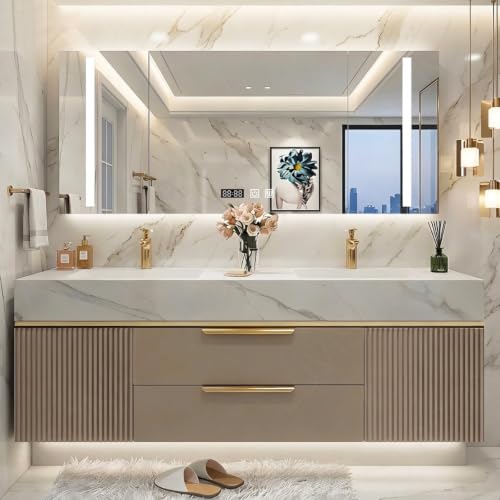
ELEGANT KHAKI FLUTED FLOATING DESIGN: Transform your master bathroom with this luxurious wall-mounted vanity. Featuring a sophisticated Khaki finish, it perfectly balances modern aesthetics with functional design. The cabinet boasts beautifully textured fluted side doors paired with smooth central drawers. The floating silhouette is elegantly accented by a sleek gold trim line and matching gold drawer handles, creating a spacious, spa-like atmosphere in your home.
Frequently Asked Questions
How Do I Know What Size Mirror to Get for My Vanity?
Choosing a mirror involves merging dimensions with vanity style, considering space, shape, and lighting effects. Installation tips focus on personal preference and placement, ensuring aesthetic balance and design cohesion within the enchanting bathroom landscape.
Should Your Bathroom Mirror Be the Same Width as Your Vanity?
The bathroom mirror should be slightly narrower than the vanity width to achieve aesthetic balance. Design considerations involve mirror width, reflection angle, and lighting effects for ideal space utilization and visual harmony in the overall bathroom setup.
Is a 40 in Mirror Too Small for a 48 Vanity?
Like a perfectly fitting book on a shelf, a 40-inch mirror complements a 48-inch vanity well, offering aesthetic balance and ideal mirror proportions, supporting style preferences, functional use, and decor harmony in lighting considerations and wall space.
What Is the Rule of Thumb for Vanity Mirrors?
The rule of thumb for vanity mirrors includes considering styles, frame options, light reflection benefits, ideal placement, avoiding mistakes, selecting shapes, decorative uses, lighting effects, maintenance advice, and choosing frame colors for aesthetic balance.


