As an Amazon Associate, we earn from qualifying purchases. Some links on this site are affiliate links at no extra cost to you. Our recommendations are based on thorough research and editorial judgment.


Mirror Height Guidelines for Multi-User Households

When determining mirror height for multi-user households, it is important to align mirrors at 60-65 inches above the floor for average adults, adjusting to 57 inches for shorter users or 70-80 inches for taller individuals. Mirrors should be positioned 5-10 inches above sinks for ideal visibility. For double vanities, consider dual mirrors or one large mirror at 70-75 inches for aesthetic balance. Installing adjustable mirrors promotes inclusivity, accommodating various user heights, while enhancing the overall functionality of the bathroom. More insights can be discovered ahead.
Key Takeaways
- Align mirrors with average eye level, typically 60-65 inches, to accommodate multiple users comfortably.
- For double vanities, consider dual mirrors above each sink for simultaneous use by different individuals.
- Maintain a clearance of 5-10 inches above faucets to ensure unobstructed mirror visibility.
- Use adjustable or tilting mirrors to cater to varying heights and preferences among users in the household.
- Opt for mirrors that complement the bathroom style while ensuring safety features for seniors or those with mobility challenges.
Importance of Eye Level in Mirror Placement
When considering the placement of mirrors, the importance of aligning them with eye level cannot be overstated, as this positioning greatly enhances usability and comfort for various individuals. Ideally, bathroom mirror heights should center around 60 inches from the floor for average adults, accommodating daily grooming tasks effectively. However, to maintain comfort across user heights, taller individuals may prefer a height closer to 65 inches, while shorter users benefit from a 57-inch positioning. Hanging mirrors 5 to 10 inches above the sink further promotes visibility without requiring awkward bending. Particularly in multi-user households, evaluating the average height of primary users is essential. Adjustable or tilting mirrors also enhance functionality, allowing for personalized adjustments that cater to diverse user preferences. For added convenience, consider mirrors with anti-fog technology, which maintain clarity after showers and enhance the overall bathroom experience.
Standard Height Recommendations for Bathroom Mirrors

Standard height recommendations for bathroom mirrors are essential for ensuring ideal usability across different user heights and preferences. Typically, a bathroom mirror height from the floor should be between 70 to 80 inches to accommodate taller individuals while maintaining functionality for daily grooming for multiple users. The average eye level for adults usually falls between 60 to 65 inches. Consequently, hanging bathroom mirrors approximately 5 to 10 inches above the sink is advisable, offering an unobstructed view of the faucets. In spaces designed for accessibility, mirrors should be limited to a maximum height of 40 inches from the floor. Additionally, adjusting mirror dimensions in relation to vanity height, typically ranging from 30 to 36 inches, optimizes comfort and usability for all. Consider choosing a recessed medicine cabinet with a mirror to save space and enhance the bathroom’s aesthetics.
Recommended Products

【Dimmable & 3 Color Temperature】: The brightness is adjustable for the lighted bathroom mirror; Simply long press the touch switch to adjust the brightness; 3 color temperature for option; warm light (3000 K); natural light (4000 K); white light (6000 K)

【Bright & Uniform LED Lighting】 Equipped with high-quality 24V LED light strips, this bathroom mirror provides bright, soft, and even illumination for makeup, shaving, skincare, and everyday grooming.

[Backlit+Front lit Bathroom Mirror]: With dual-light design, Briivue LED bathroom mirror with front light and backlit which is bright enough for doing makeup or beauty care.
Adjusting Mirror Height for Different Faucet Styles

Adjusting the height of a bathroom mirror is essential, especially in multi-user households where varying faucet styles impact visibility and usability. The recommended placement indicates hanging mirrors 5 to 10 inches above the sink faucet, ensuring ideal visibility without obstruction. For instance, tall faucet spouts necessitate a higher mirror position, accommodating user height variations. To enhance functionality, adjust the mirror height between 60 to 80 inches from the floor to the mirror’s top edge, aligning it with diverse user preferences. In addition, proper mirror height adjustments promote an aesthetic balance, drawing attention to key fixtures, like faucets, while meeting household needs effectively. By thoughtfully considering faucet style and user dimensions, households can achieve both comfort and style. It’s important to select bathroom faucets that offer water efficiency features, as they are both environmentally friendly and contribute to the overall functionality of your bathroom setup.
Recommended Products

【Customization Service】We offer comprehensive customization services, supporting personalized choices in style, size and color. Customize the ideal dressing table according to your needs to meet personalized decoration and usage requirements.

Modern Floating Design: The bathroom vanity adopts a fashionable floating design and is suspended on the wall to release more floor space and make the bathroom appear more spacious and transparent. With glass side cabinets, both display and storage functions, place daily supplies, add life atmosphere, and create a practical and beautiful bathroom environment.
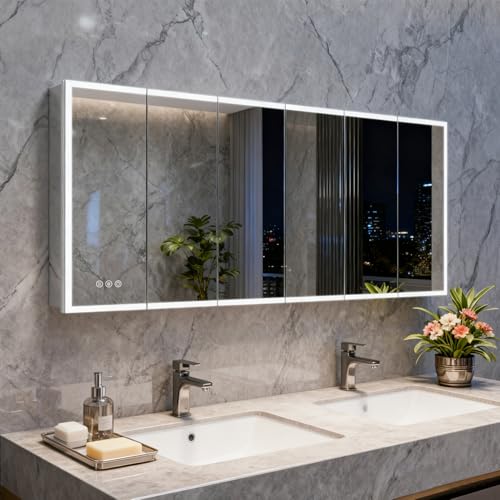
Adjustable Illumination Features: GUIQIYANG Medicine cabinet is equipped with customizable light intensity, enabling you to create the ideal ambiance for any hour of the day. Select from three distinct color temperatures—cool white, natural white, and warm yellow—allowing you to fine-tune your lighting to meet your preferences.
Considerations for Double Vanities

In multi-user households with double vanities, the considerations for mirror placement extend beyond mere height adjustments, requiring meticulous planning to accommodate the diverse needs of all users. Ideally, mirrors should be positioned at a height that aligns with the average eye level of taller individuals, typically placing the center around 60-65 inches from the floor. Each mirror’s bottom edge must maintain a clearance of 5-10 inches above faucets for maximum functionality. For a cohesive aesthetic, choose slightly narrower mirrors that do not exceed the total width of the double vanity. Alternatively, a large mirror can offer a unified appearance, ideally with its top edge set at 70-75 inches. Such positioning emphasizes balance, enhancing visual harmony and usability. Consider incorporating non-slip features in bathroom fixtures to enhance safety, particularly for households with seniors or individuals with mobility challenges.
Recommended Products
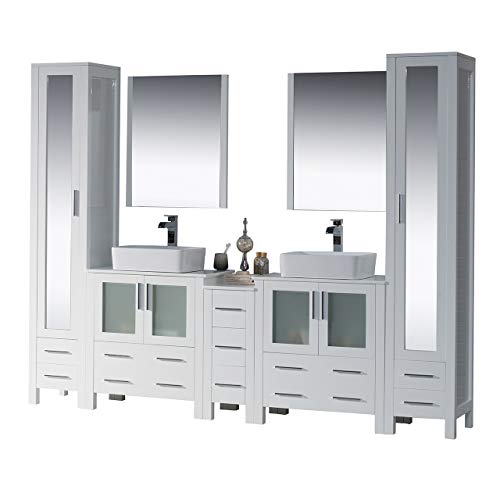
ESTATE-SIZED MASTER SUITE LUXURY: Command your bathroom renovation with this massive 102 inch bathroom vanity. Designed as a 102 inch double vanity masterpiece, this set provides a wall-to-wall custom cabinetry look that anchors any grand master suite with unmatched architectural presence and scale

GRAND MASTER SUITE SOLID WOOD CONSTRUCTION: Elevate your home equity with our 102-inch luxury double vanity solid wood frame. Unlike competitor plywood or MDF alternatives, our kiln-dried hardwood prevents warping and ensures structural integrity for a lifetime, making it a solid wood bathroom furniture investment for high-end remodels

Modern Design and Ample Storage: This stylish bathroom vanity boasts a contemporary floating design that saves floor space and adds a clean, minimalist look. Its double-sink bathroom vanity configuration includes multiple drawers and cabinets, providing generous storage to keep your bathroom organized and clutter-free.
Customized Solutions for User Needs

While it is essential to meet the diverse needs of various users, customized solutions for mirror placement can greatly enhance usability and aesthetics in shared bathrooms. For multi-user households, adjustable wall-mounted mirrors facilitate comfortable viewing angles for differing heights. Installing mirrors 5 to 10 inches above the sink aids in accommodating both shorter and taller individuals, ensuring optimal functionality. Customizable mirror heights should align with the eye level of household members, typically ranging from 57 to 65 inches for the center of the mirror. Additionally, dual mirrors above each vanity can enhance functionality during simultaneous use. Frameless mirrors provide flexibility in shape and size, tailored to meet the unique needs of all users and maximize the bathroom space effectively. For added convenience, consider medicine cabinets like the TokeShimi Recessed Medicine Cabinet with adjustable shelves and sleek designs to further personalize and optimize bathroom storage and organization.
Recommended Products

MADE IN ITALY: entirely designed and produced in our company in Italy.
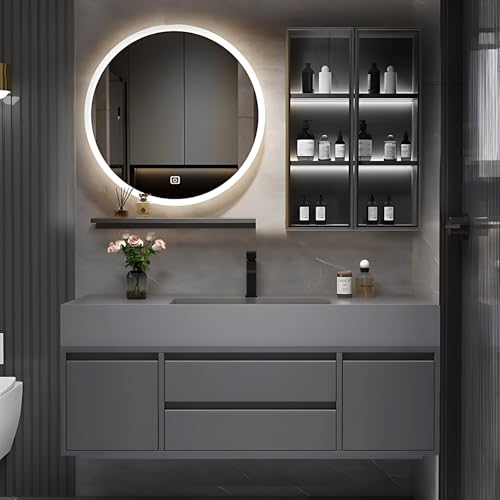
LED Lights: The mirror of the bathroom cabinet is equipped with warm-colored light strips. They are clear, beautifying, and not dazzling at all, without any concerns about light issues. The light of these light strips is uniform and soft, and their color temperature has been carefully adjusted to fall within the range that is most suitable for the human eye's visual perception. When users stand in front of the mirror, the facial details can be accurately presented.

Anti-Fog Technology: Never worry about foggy mirrors again! Our 96x40 bathroom mirror cabinet features anti-fog tech that keeps the mirror clear even after hot showers, delivering reliable clarity for your daily routine
Enhancing Functionality With Proper Lighting
Proper lighting is an essential element in enhancing the functionality of mirrors, especially in spaces where daily grooming tasks take place. Effective lighting placement, such as installing wall-mounted sconces 60 to 70 inches above the floor, minimizes shadows and boosts visibility. LED mirrors seamlessly integrate reflection and illumination, making makeup application more efficient. Overhead lighting should be positioned at a height of 75 to 80 inches to enhance effectiveness while averting glare on the mirror surface. Implementing layered lighting strategies that combine ambient and task lighting accommodates various user preferences and mirror heights. Additionally, opting for fixtures with adjustable brightness allows individuals to tailor lighting according to different times of the day or specific grooming tasks, considerably improving overall functionality. Anti-fog technology in LED bathroom mirrors ensures clarity during humid conditions, further enhancing the usability of these mirrors.
Recommended Products
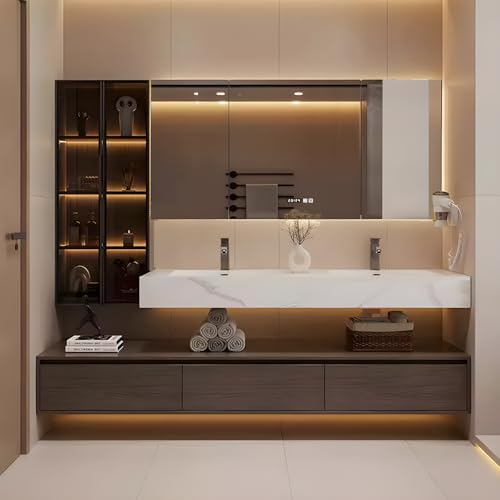
✅ SMART LED ANTI-FOG MIRROR CABINET: This bathroom vanity with sink includes a multifunction mirror cabinet with one-touch LED lighting and a heated anti-fog function that helps keep the mirror clear in humid conditions. A built-in time and temperature display adds everyday convenience, while soft, even illumination supports grooming, skincare, shaving, and makeup. The side cabinet gives this high end bathroom vanity a clean, coordinated look

Perfect design: Featuring a sintered stone integrated sink and countertop, this bathroom vanity cabinet blends classic luxury with modern elegance. Inspired by the Louvre’s graceful curves, it offers unmatched durability, easy cleaning, and timeless design. Ideal for floating vanity bathroom upgrades.

OPTIMIZED BATHROOM STORAGE: Make the most of your bathroom with smart storage solution. Featuring thoughtfully arranged drawers and spacious shelves behind soft-closing doors, this bathroom sink cabinet offers ample storage space. The upper mirror cabinet features divided compartments to organize your daily essentials.
Tips for Achieving Visual Harmony in Bathroom Design
Achieving visual harmony in bathroom design greatly enhances the overall aesthetic and functionality of the space, especially when considering how mirrors interact with other elements. To maintain balance, mirror widths should be proportional to the vanity size, often matching or slightly less than it. For multi-user households, determining mirror height is essential; positioning mirrors around 60-65 inches from the floor accommodates various user heights effectively. Additionally, incorporating frames or finishes that complement the bathroom decor fosters visual unity. Adequate spacing of 2-3 inches between mirrors and lighting fixtures avoids overcrowding while enhancing aesthetic appeal. In larger double vanity setups, aligning mirror heights and distances creates a cohesive arrangement that considerably improves the overall design flow. Consider using mirrors made from high-quality aluminum alloy as they are both waterproof and non-rusting, adding durability and style to your bathroom setup.
Frequently Asked Questions
What Are the ADA Guidelines for Mirrors?
Mirrors must adhere to ADA compliance, ensuring accessible design through appropriate mirror dimensions. Height specifications recommend installations at 34-40 inches for ideal bathroom accessibility, accommodating diverse user demographics and visual impairments while meeting crucial safety regulations.
What Height Should a Mirror Be Placed?
For ideal mirror placement, consider adjustable mirror designs and bathroom mirror heights. Mirror installation tips suggest positioning for accessibility, while decorative mirror styles and frame options enhance aesthetics in multi-user households, including living rooms and hallways.
What Is the Height of the Mirror Required?
The ideal mirror height typically ranges from 57 to 65 inches for full-length mirrors, ensuring functionality and alignment with design trends. Incorporating accessibility features enhances child safety while maximizing wall space for decorative mirrors in bathrooms or living rooms.
What Are the Rules for Mirror Placement?
Proper mirror placement considers mirror size, wall space, and user preferences. Bathroom and makeup mirrors should be accessible, while full-length mirrors accommodate children’s height. Incorporating design styles and decorative accents enhances functional and aesthetic appeal.


