As an Amazon Associate, we earn from qualifying purchases. Some links on this site are affiliate links at no extra cost to you. Our recommendations are based on thorough research and editorial judgment.


Mirror-Integrated Lighting: Edge-Lit Vs Backlit

Mirror-integrated lighting includes edge-lit and backlit mirrors, each with unique features. Edge-lit mirrors utilize LEDs around the glass edges for precise, bright illumination ideal for grooming tasks. Their installation is simpler due to slimmer profiles, making them more user-friendly. In contrast, backlit mirrors incorporate LEDs behind the glass, offering a softer, ambient glow that reduces glare and includes anti-fog technology. Although backlit mirrors may cost more and require professional installation, they provide a luxurious aesthetic. Exploring this topic further reveals even more insights on these lighting options.
Key Takeaways
- Edge-lit mirrors provide high clarity and targeted brightness, ideal for daily grooming tasks with higher lux levels.
- Backlit mirrors create a soft glow for an inviting atmosphere, reducing glare and eye strain with even illumination.
- Installation of edge-lit mirrors is simpler and user-friendly compared to the more complex, professional installation required for backlit mirrors.
- Backlit mirrors often feature anti-fog technology, making them suitable for humid environments like bathrooms.
- Edge-lit mirrors are generally more budget-friendly, while backlit options typically have higher upfront costs due to installation complexity and materials.
Understanding Edge-Lit and Backlit Mirrors

When considering the lighting options for mirrors, the distinction between edge-lit and backlit designs plays an essential role in their application. Edge-lit mirrors feature LED lights positioned along the glass perimeter, providing high clarity and targeted brightness, ideal for detailed grooming tasks. In contrast, backlit mirrors integrate LEDs behind the glass, creating a soft, ambient glow that enhances a space’s visual appeal by fostering a spa-like atmosphere. Installation considerations differ, as edge-lit mirrors typically have a slimmer profile, simplifying the installation process, whereas backlit mirrors require deeper cavities for proper mounting. Understanding these differences allows consumers to select a style that aligns with both functionality and aesthetics, whether they favor a minimalist look or a more inviting décor. Additionally, some LED bathroom mirrors, like those from GLSLAND and DUMOS, offer anti-fog technology and multiple lighting options, providing enhanced user experience and functionality.
Performance Characteristics of Edge-Lit and Backlit Mirrors

The performance characteristics of edge-lit and backlit mirrors greatly influence their usability and overall impact in various environments. Edge-lit mirrors provide higher lux levels, making them ideal for task-intensive areas such as daily grooming, offering superior illumination for precise activities. In contrast, backlit mirrors create a softer lighting effect that enhances aesthetics and adds warmth to bathroom settings. While edge-lit mirrors feature slim profiles that simplify installation in constrained spaces, backlit mirrors necessitate deeper cavities, leading to more intricate installation processes. Both options cater to distinct user needs, balancing functionality and design. Furthermore, the energy costs associated with these mirrors can vary, further influencing consumer choices based on personal preferences and operational sustainability. Many LED bathroom mirrors, such as those with dimmable lighting options, allow users to customize brightness levels to suit individual preferences and tasks, enhancing their functionality and user experience.
Recommended Products

【Optimized Luminosity and Harmony】 The Front&Backlit Lighted Medicine Cabinet is designed to masterfully enhance functionality within your space. Equipped with state-of-the-art LED strips, this medicine cabinet delivers a dual-purpose lighting solution. The front illumination provides ample light for practical uses such as grooming and makeup, ensuring clarity and precision. Meanwhile, the backlighting casts a soft, ambient glow, enriching your room's atmosphere with a serene light.

[Luxurious Design] EchosLife is the perfect choice for a high-end bathroom remodel and will provide a refreshing start to your day.

【Upgraded Backlit Illumination】This LED backlit bathroom mirror is built with UL-certified high-density LED strips (120 LEDs/m), delivering brighter and more even illumination than standard bathroom mirrors. The PVC-covered LED light strip softens output to reduce glare, while CRI 90+ provides clear, natural reflection—ideal for daily grooming and makeup.
Installation Differences Between Edge-Lit and Backlit Mirrors

While both edge-lit and backlit mirrors serve functional and aesthetic purposes, their installation procedures differ considerably, impacting user convenience and overall project feasibility. Backlit mirrors necessitate integrated wiring and often require professional help, as their installation involves complex setups, including creating deeper wall cavities to conceal the lighting for ideal lighting effects. Conversely, edge-lit mirrors, known for their slimmer profiles, are more user-friendly as they allow for easier retrofits and typically enable straightforward mounting onto the wall surface without major modifications. This flexibility offers users the chance to adjust placement after installation, making it a more accessible option for those looking to enhance their space with minimal effort and specialized skills. Additionally, energy-efficient LED lights are commonly used in both types of mirrors, providing enhanced visibility and contributing to reduced energy consumption.
Cost Comparison: Edge-Lit vs. Backlit Mirrors

Cost considerations play a crucial role in choosing between edge-lit and backlit mirrors, as these two options present distinct financial implications based on their installation complexity and material composition. Backlit mirrors typically require higher upfront costs due to the intricate installation process and necessity for integrated wiring, which elevates overall project expenses. Conversely, edge-lit mirrors often come at a more budget-friendly price point since they facilitate quicker installation, minimizing associated labor costs. Additionally, the price of lighting fixtures for backlit mirrors generally exceeds that of edge-lit options. While backlit mirrors may entail a larger initial investment, they offer unique aesthetic benefits that appeal to modern home designs. Both mirror types provide various price options, enabling consumers to choose according to their budget and feature preferences. For those considering bathroom upgrades, the installation of a quiet toilet fill valve can also complement these modern design choices by reducing noise and improving water efficiency.
Recommended Products

🪞Dual LED Lighting: Built-in lighting strips offer front and back dual illumination, enhancing lighting for detailed tasks like makeup application and shaving.

【Dual LED Lighting & Flexible Installation】Built-in lighting strips offer front and back dual illumination, enhancing lighting for detailed tasks like makeup application and shaving. Suitable for both surface and recessed installation, adapting to different decorative styles and space needs.

Dual LED Lighting & 5x Magnifying Mirror: Features front and back dual LED lighting for enhanced visibility during tasks like makeup application and shaving, complemented by a movable 5x magnifying mirror for detailed inspection.
Lighting Effects: Edge-Lit vs. Backlit Mirrors

When considering lighting effects in mirrors, understanding the distinctions between edge-lit and backlit configurations is essential for making an informed choice. Edge-lit mirrors utilize LEDs positioned along their perimeter, providing focused brightness, ideal for grooming tasks like makeup application with heightened clarity. In contrast, backlit mirrors feature LEDs mounted behind the glass, creating a diffused, soft glow that promotes an ambient atmosphere and depth in design. While edge-lit mirrors yield dramatic illumination with sharper shadows, therefore enhancing visibility in task-heavy environments, backlit mirrors offer even illumination, which reduces glare and eye strain, fostering a relaxing, spa-like space. Backlit bathroom mirrors often incorporate anti-fog capabilities to maintain clarity in humid conditions. Ultimately, the selection of mirror type considerably influences both the aesthetic and functionality of a room, catering to various lighting needs.
Benefits of Edge-Lit Mirrors
Edge-lit mirrors offer several benefits that make them a popular choice for many consumers seeking both style and functionality in their spaces. These mirrors feature LEDs positioned along the perimeter, providing high clarity and focused illumination ideal for grooming tasks. With a slimmer profile compared to backlit options, edge-lit mirrors fit seamlessly into spaces with spatial constraints. Their easy installation allows for quick retrofitting in existing locations without complex construction, making them a practical choice. The modern aesthetic and customizable options enable users to select designs that enhance their decor. Additionally, edge-lit mirrors provide bright, shadow-free illumination, improving visibility for detailed tasks such as makeup application, ultimately contributing to more successful grooming outcomes. One notable advantage of edge-lit mirrors is their anti-fog function, which ensures clear visibility even in humid bathroom environments.
Recommended Products
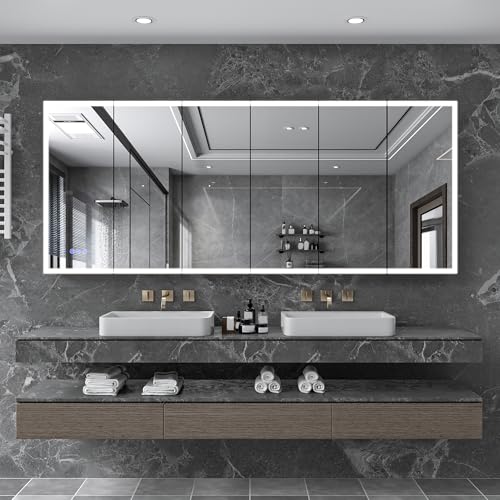
【LED Medicine Cabinet with Lights】The bathroom cabinet has a built-in sockets with USB ports, compatible with various appliances, including hair dryers. Features a 15A socket with 14AWG wire, complies with U.S. standards, waterproof, ensuring worry-free operation

PREMIUM PACKAGING: This medicine cabinet with mirror adopts a multi-layer protective structure consisting of an outer packing box, impact-resistant wood board, impact-resistant foam block and foam board, with each layer stacked to enhance impact resistance. It effectively cushions collisions, squeezes and vibrations during transportation, ensuring the medicine cabinet remains intact from the warehouse to your hands and avoiding transportation damage issues

💡【Edge-Lit Innovation Full Mirror Premium Glow】Unlike central-strip designs that reduce usable mirror area, our outer-edge sandblasted frosted LED strip maximizes mirror space for clear, unobstructed grooming. More decorative than lamp-shaded styles, it maintains elegant aesthetics when lit or off. To address the common dimness issue in sandblasted strips, we widened it to 1 inch—delivering both premium aesthetics and bright, cozy bathroom lighting in one.
Benefits of Backlit Mirrors
While backlit mirrors may require more complex installation due to their integrated wiring, the benefits they offer in terms of ambiance and functionality often outweigh the initial challenges. Backlit mirrors create a soft, ambient glow that enhances a space’s atmosphere while providing indirect lighting, which reduces glare and eye strain. Utilizing LED technology positioned behind the mirror, these fixtures boast energy efficiency and long-lasting durability, with lights that can last approximately 50,000 hours. Additionally, backlit mirrors deliver even illumination without harsh shadows, making them ideal for grooming tasks. Their design often includes frosted edges, resulting in an elegant floating effect that adds significant visual appeal and an aesthetic upgrade to modern and spa-like interiors. Many backlit mirrors are constructed from tempered glass, ensuring enhanced safety and durability.
Recommended Products

【Anti-Fog & IP54 Waterproof】Built in defogger ensures the led vanity bathroom mirror stays clear and fog-free. The anti-fog switch are separate control, which is safe and energy-saving and you can open and close according to your need,and our anti fog mirror bathroom has IP54 waterproof design.
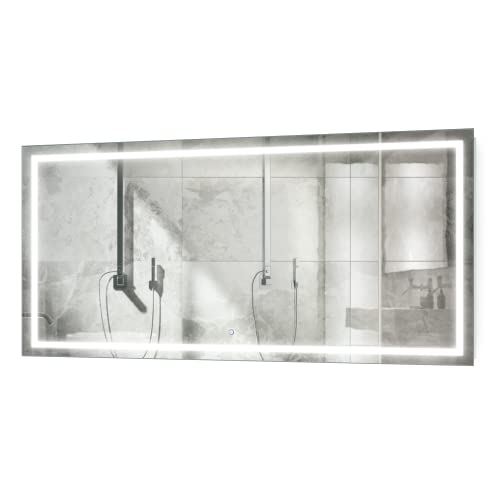
✅LED FRONTLIT MIRROR: The Lighted Vanity mirror features LED light that creates bright yet energy-efficient illumination. Our long-lasting LED provides 50,000 hours of use.

Recommendations for Choosing Between Edge-Lit and Backlit Mirrors
Choosing the right mirror can significantly impact both the functionality and aesthetics of a space, especially in areas where grooming and personal care occur regularly. When deciding between edge-lit and backlit mirrors, one should consider the intended use; edge-lit mirrors provide higher lux levels, making them suitable for detailed tasks, while backlit mirrors create inviting ambient lighting with a soft glow. Edge-lit models are slim, requiring less wall space, and offer easier installation compared to the deeper cavities necessary for backlit mirrors. However, for those prioritizing modern aesthetics, backlit mirrors deliver a sophisticated, floating appearance. Ultimately, the decision should reflect both practicality and designer preferences, factoring in light quality and the specific characteristics of the mirror surface. When considering bathroom setups, integrated LED lights in exhaust fans can also enhance the overall lighting and design experience.
Recommended Products

【Upgraded Backlit Illumination】This LED backlit bathroom mirror is built with UL-certified high-density LED strips (120 LEDs/m), delivering brighter and more even illumination than standard bathroom mirrors. The PVC-covered LED light strip softens output to reduce glare, while CRI 90+ provides clear, natural reflection—ideal for daily grooming and makeup.

【Anti-Fog & IP54 Waterproof】Built in defogger ensures the led vanity bathroom mirror stays clear and fog-free. The anti-fog switch are separate control, which is safe and energy-saving and you can open and close according to your need,and our anti fog mirror bathroom has IP54 waterproof design.

TRUE-TO-LIFE REFLECTION (CRI 90+) - Experience professional studio-quality lighting with our high-lumen dual lighting system. Featuring both front-lit and backlit technology, this CRI 90+ led bathroom mirror provides shadowless lighting that renders skin tones and makeup colors with 100% accuracy, far surpassing standard low-CRI vanity mirrors.
Case Studies Highlighting Edge-Lit and Backlit Mirror Applications
In the domain of interior design, the choice between edge-lit and backlit mirrors can profoundly influence both functionality and aesthetic appeal in various settings. For example, AC Hotel Tuscaloosa utilized edge-lit mirrors to deliver high clarity and targeted brightness, enhancing their minimalist design with a modern look. In contrast, Cambria Hotel installed backlit mirrors in guest bathrooms, creating a soft ambient lighting effect that greatly improved the overall guest experience. Planet Fitness opted for circular edge-lit mirrors to facilitate quick grooming, merging functionality with aesthetics. These case studies demonstrate the versatility of both mirror types in hospitality settings, showcasing how custom lighting packages can elevate brand identity while addressing practical considerations effectively. For residential settings, products like the TokeShimi Wall Mirror offer stylish yet durable options that can complement various bathroom designs.
Frequently Asked Questions
Which Is Better, a Backlit or Front Lit Mirror?
Choosing between backlit or front-lit mirrors depends on user preferences. Backlit mirrors offer an ambient glow with energy efficiency and sophisticated design aesthetics, while front-lit mirrors provide focused lighting intensity with installation ease for practical grooming solutions.
What Is the Difference Between Backlit and Edge Lit Lighting?
The difference between backlit and edge-lit lighting techniques lies in design aesthetics, installation methods, and energy efficiency. Backlit mirrors provide ambient lighting with softer color temperature, while edge-lit options offer brighter illumination catering to user preferences and maintenance needs.
Is a Backlit Mirror Worth It?
In a world where candles flickered, the backlit mirror emerged, boasting aesthetic appeal and energy efficiency. Though installation is complex, its bulb lifespan and benefits outweigh costs, catering to diverse user preferences despite variable lighting intensity.
Which Light Is Better for a Mirror?
Choosing the best light for a mirror depends on mirror placement, lighting intensity, style preferences, and cost comparison. Ideal color temperature enhances aesthetic appeal, while power consumption and maintenance tips influence long-term satisfaction and installation methods.


