As an Amazon Associate, we earn from qualifying purchases. Some links on this site are affiliate links at no extra cost to you. Our recommendations are based on thorough research and editorial judgment.

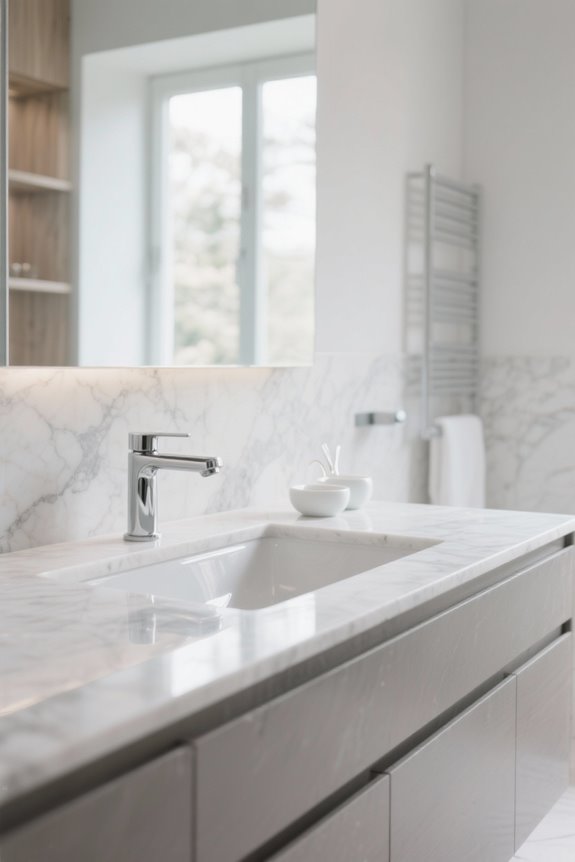
Sink Materials: Porcelain, Ceramic, Glass, Stone, and More

Sink materials include porcelain, ceramic, glass, and natural stone, each offering unique characteristics. Porcelain sinks are glossy and stain-resistant but may chip, while ceramic options are affordable and durable with various styles. Glass sinks provide contemporary aesthetics but require careful handling due to fragility. Natural stone sinks, like granite, require regular sealing for durability. Stainless steel sinks are budget-friendly, easy to maintain, and resistant to corrosion. Understanding these materials helps in selecting the right sink for specific bathroom needs, inviting further insights on the subject.
Key Takeaways
- Porcelain sinks are stain-resistant and easy to clean but may chip; ideal for delicate items due to heat retention.
- Ceramic sinks offer affordability, durability, and various styles, making them a popular aesthetic choice in bathrooms.
- Glass sinks provide a modern look and are easy to clean, but require careful handling due to their fragility.
- Natural stone sinks like granite and marble are unique in appearance but need regular sealing to prevent absorption and maintain longevity.
- Stainless steel sinks are budget-friendly, corrosion-resistant, and hygienic, making them suitable for high-use bathrooms with easy maintenance requirements.
Overview of Sink Materials
Sinks are essential fixtures in both kitchens and bathrooms, constructed from a variety of materials that influence their functionality, appearance, and maintenance. Porcelain sinks, fired at high temperatures, showcase a glossy, non-porous surface that is both stain resistant and easy to clean, yet they may chip under heavy impact. Ceramic sinks, made from less refined clay, are affordable, durable, and available in diverse colors and styles, offering good stain resistance. Glass sinks, crafted from tempered glass, provide a contemporary look but necessitate careful handling to prevent breakage. In contrast, natural stone sinks, such as granite and marble, feature unique characteristics but require regular sealing. Stainless steel sinks are acclaimed for durability, low maintenance, and resistance to stains and corrosion, making them popular choices. Many undermount sinks are made from high-quality materials like ceramic and porcelain, ensuring durability and ease of maintenance.
Benefits of Porcelain and Ceramic
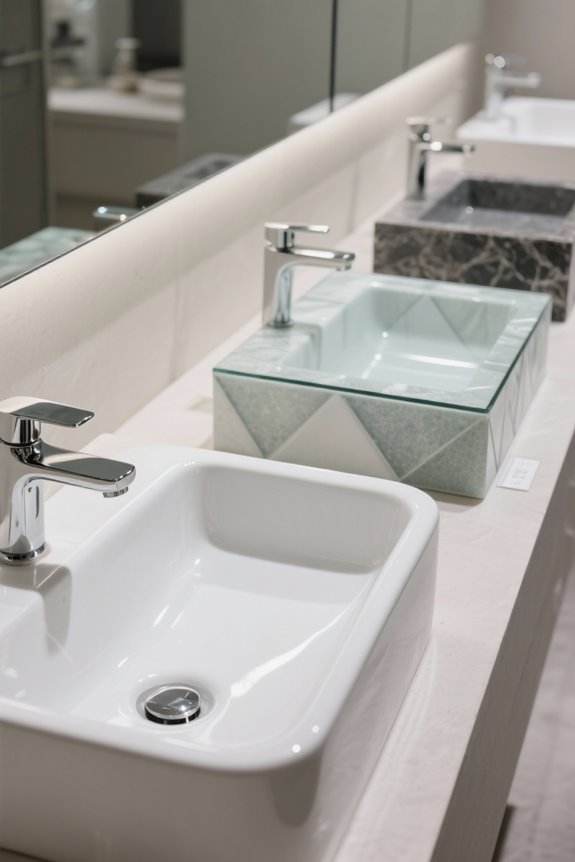
When evaluating the benefits of porcelain and ceramic sinks, it becomes clear that both materials offer distinct advantages suited to various needs in residential spaces. Porcelain sinks, crafted from refined clay and fired at high temperatures, feature a glossy, non-porous surface that is easy to clean and resistant to stains and scratches. In contrast, ceramic sinks, made from less refined clay, are often more affordable while providing durability and a variety of styles. Both materials maintain their finishes with gentle cleaning using non-abrasive soaps. Porcelain sinks excel at retaining heat, making them excellent for washing delicate items, whereas ceramic sinks resist chips and impacts, suiting high-traffic areas and diverse design preferences, enhancing overall bathroom aesthetics. Additionally, vitreous china sinks are renowned for their remarkable durability and are a popular choice for pedestal bathroom sinks.
Recommended Products


Bathroom vanity dimensions : 85"W x 22"D x 36"H

📦 Easy Set-Up – This 60 inch bathroom vanity double sink design offers a hassle-free installation. With an accommodating design for plumbing and a pre-installed Carrara Marble Countertop, setting up your new bathroom staple is a breeze.
Characteristics of Glass and Stone Sinks
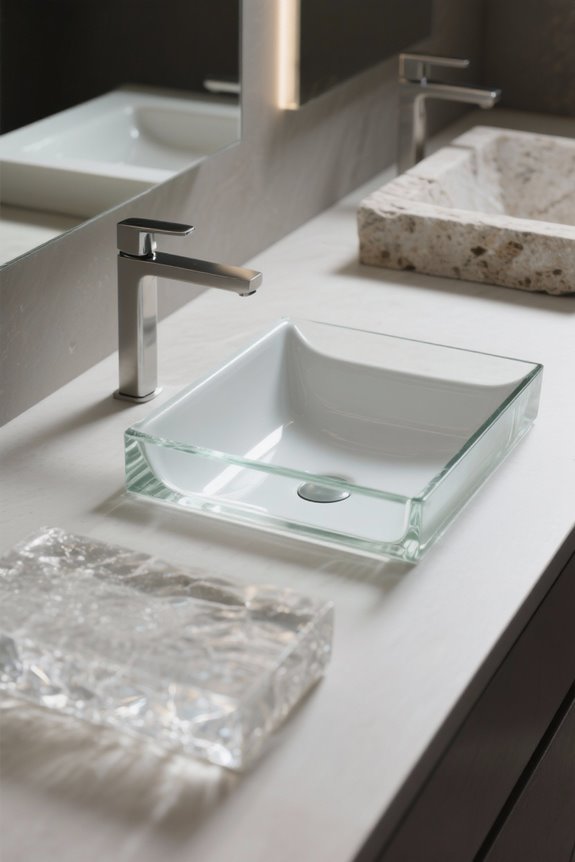
In contemporary bathroom design, the choice between glass and stone sinks presents homeowners with unique characteristics that cater to both aesthetic and functional needs. Glass sinks, crafted from tempered glass, offer striking visual appeal with various colors and textures, making them easy to clean due to their non-porous nature; however, their fragility necessitates careful handling. In contrast, stone sinks, formed from solid blocks of natural stone like granite or marble, provide exceptional durability and individuality, showcasing color variances and patterns. They also require regular sealing to prevent absorption and maintain their integrity. While both options enhance bathroom aesthetics, glass sinks may be more appropriate for low-traffic areas, while stone sinks excel in durability for high-use environments with proper care. Freestanding bathtubs like the WOODBRIDGE Whirlpool Water Jetted and Air Bubble Bathtub offer luxurious and ergonomic designs that complement modern bathroom aesthetics, enhancing the overall relaxation experience.
Recommended Products

GRAND MASTER SUITE SOLID WOOD CONSTRUCTION: Elevate your home equity with our 102-inch luxury double vanity solid wood frame. Unlike competitor plywood or MDF alternatives, our kiln-dried hardwood prevents warping and ensures structural integrity for a lifetime, making it a solid wood bathroom furniture investment for high-end remodels
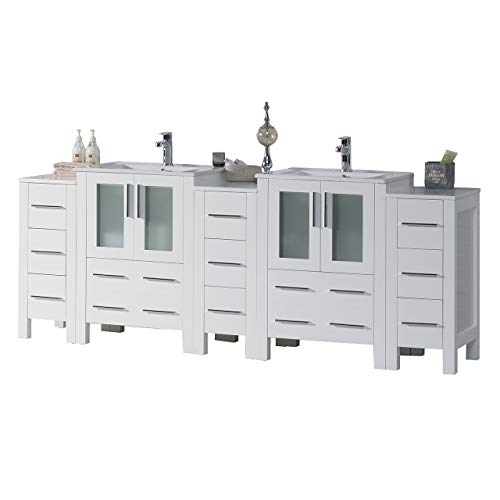
Premium Solid Wood Frame Construction – Built for strength and durability, this freestanding bathroom vanity offers a sturdy base capable of supporting any countertop or sink. Its high-quality materials ensure long-lasting performance.

DOUBLE EXCLUSIVE BATHROOM VANITY: Double sink design meets the needs of multiple users at the same time, reducing waiting time. The spacious operating space allows each user to have a separate area to easily cope with the busy morning moments.
Exploring Stainless Steel and Solid Surface Options
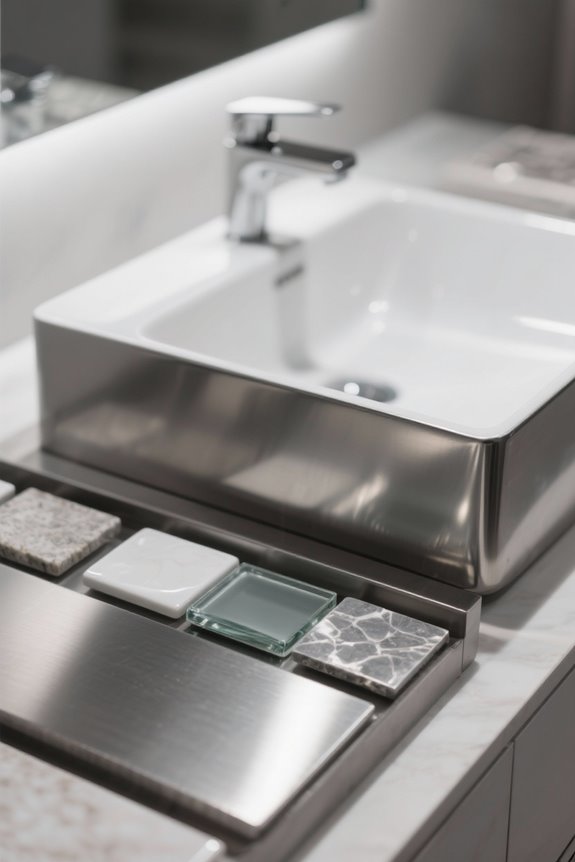
While evaluating various sink options for modern bathrooms, a closer look at stainless steel and solid surface materials reveals a thorough understanding of their practical benefits and design potential. Stainless steel sinks are renowned for their durability and resistance to corrosion, making them budget-friendly choices, often starting around $100, and easy to maintain with just mild soap and water. In contrast, solid surface sinks are made from a poly-resin blend, offering non-porous properties that resist stains and scratches, and can be customized in various shapes and colors. Both materials provide hygienic options; stainless steel is germ-resistant, while solid surface sinks can feature seamless designs, preventing bacteria accumulation. Regular maintenance for stainless steel involves daily cleaning, whereas solid surface sinks require only gentle cleaning. Many widespread bathroom faucets are designed to complement these sink materials, offering a perfect marriage of style and functionality in modern bathroom designs.
Recommended Products

STURDY STAINLESS STEEL CONSTRUCTION: Made from premium-grade stainless steel, this sink offers superior durability and resistance to rust, water, food stains, and harsh chemicals, making it a reliable, long-lasting addition to any kitchen or bar.
STURDY STAINLESS STEEL CONSTRUCTION: Made from premium-grade stainless steel, this sink offers superior durability and resistance to rust, water, food stains, and harsh chemicals, making it a reliable, long-lasting addition to any kitchen or bar.

SLEEK DESIGN: The 13" sink bowl with a 6-1/4" depth provides enough workspace for drink prep, fine stemware, and everyday cleanup while keeping your kitchen organized. Ideal for both commercial and residential use. Pack of 40
Choosing the Right Sink Material for Your Bathroom
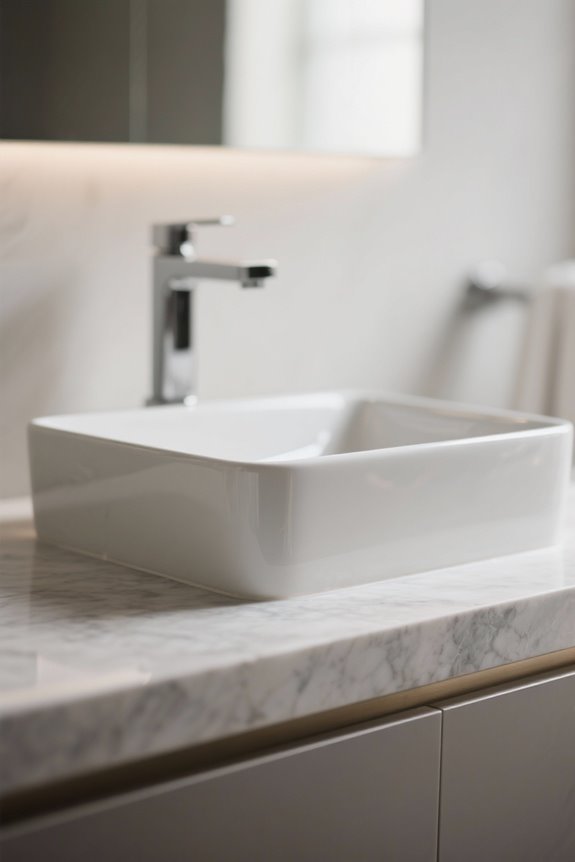
How can one effectively choose the right sink material for a bathroom remodel? Selecting the ideal sink involves considering durability, maintenance, and aesthetics. Porcelain and ceramic sinks are both resistant to stains; however, porcelain’s glossy finish may chip if heavy items fall. Conversely, ceramic is typically more affordable and offers a variety of styles. For a contemporary look, glass sinks provide unique designs but need careful handling to prevent damage. Natural stone sinks, like granite, deliver enchanting artistry, yet require regular sealing to maintain their appearance. Stainless steel sinks are designed for easy maintenance and extreme durability, fitting well in high-use bathrooms but may necessitate frequent cleaning to avoid water stains. For those seeking a warm and unique option, copper sinks enhance the bathroom’s aesthetic with their distinctive finishes and craftsmanship. Careful assessment of these factors will guide a smart choice.
Frequently Asked Questions
What Is Better for a Sink, Porcelain or Ceramic?
Porcelain offers enhanced durability and heat resistance, while ceramic provides a cost-effective solution with extensive color options. Maintenance comparison emphasizes porcelain’s glossy finish, yet ceramic’s lighter weight may simplify the installation process for various sink aesthetics.
What Is the Best Material for a Vanity Sink?
Choosing a vanity sink is like selecting a masterpiece; durability, maintenance, and style converge. Eco-friendly options and diverse colors, alongside recent trends, enhance any design. Affordable materials offer luxurious features with thoughtful sizing for seamless installation.
What Type of Kitchen Sink Material Is Best?
The best kitchen sink material often combines stainless steel durability with composite sink advantages, featuring noise reduction and heat resistance. Eco-friendly materials and budget-friendly options also enhance sink design trends, ensuring practical sink installation and cleaning techniques.
What Are the Disadvantages of a Porcelain Sink?
The disadvantages of a porcelain sink include chipping risks, staining issues, and cracking concerns, coupled with maintenance difficulty and installation challenges, all while offering limited color options and aesthetic preferences at potentially higher cost factors.


