As an Amazon Associate, we earn from qualifying purchases. Some links on this site are affiliate links at no extra cost to you. Our recommendations are based on thorough research and editorial judgment.


Beam Angle Basics for Bathroom Fixtures

Beam angles are critical for bathroom lighting, affecting how light is distributed. Ideal angles vary: narrow beams (20° to 30°) work well for focused task areas like mirrors, while wider angles (60° or more) create softer ambient light. Factors such as ceiling height and room size influence beam angle selection; higher ceilings may require wider distributions for even coverage. Selecting the appropriate beam angle and lumen output guarantees safety, visibility, and comfort, enhancing the overall user experience. To explore additional insights, continue beyond this overview.
Key Takeaways
- Beam angles for bathroom fixtures typically range from 30° to 60° for effective coverage and illumination.
- Narrow beam angles (20° to 30°) are ideal for focused task lighting, especially around mirrors.
- Wider beam angles (over 60°) create ambient lighting, providing a soft, evenly dispersed glow.
- The choice of beam angle affects visibility, safety, and overall user experience in the bathroom.
- Combining different beam angles enhances functionality by catering to various lighting needs and tasks.
Understanding Beam Angles in Bathroom Lighting
In understanding beam angles in bathroom lighting, one must first acknowledge the critical role they play in determining how light is distributed throughout the space; beam angles, which describe the width of the light projection, typically range from 30° to 60° for ideal coverage, effectively illuminating areas while reducing harsh shadows. Narrow beam angles, such as 20° to 30°, are suitable for focused task lighting around mirrors, enabling precise grooming activities. Conversely, wide beam angles exceeding 60° can create ambient lighting, dispersing light evenly in larger bathrooms to eliminate dim spots. The effective use of LED fixtures allows for a diverse lighting setup, combining narrow beams for accent lighting with wider angles for general illumination, enhancing both functionality and aesthetics. Damp-rated fixtures are essential in bathroom environments to withstand moisture levels and ensure safety and longevity of the lighting setup.
Importance of Beam Angles for Functional Spaces

Understanding beam angles in bathroom fixtures leads directly into their importance for functional spaces, as the choice of beam angle greatly influences both lighting quality and user experience. Narrow beam angles, particularly in the range of 15°-25°, serve effectively as task lighting, concentrating light intensity on specific areas, ideal for activities like shaving. Conversely, wide beam angles, exceeding 40°, facilitate better ambient lighting in larger bathrooms, ensuring light is evenly distributed to minimize shadows. Proper beam angle selection, typically between 30°-50°, enables a balanced environment by blending focused and ambient lighting, essential for areas such as vanities and shower stalls. This thoughtful approach not only enhances visibility but also promotes safety by eliminating dark spots where slips may occur. Ensure E26 socket compatibility and a minimum of 200 lumens per square foot for optimal brightness in bathroom environments.
Recommended Beam Angles for Specific Tasks
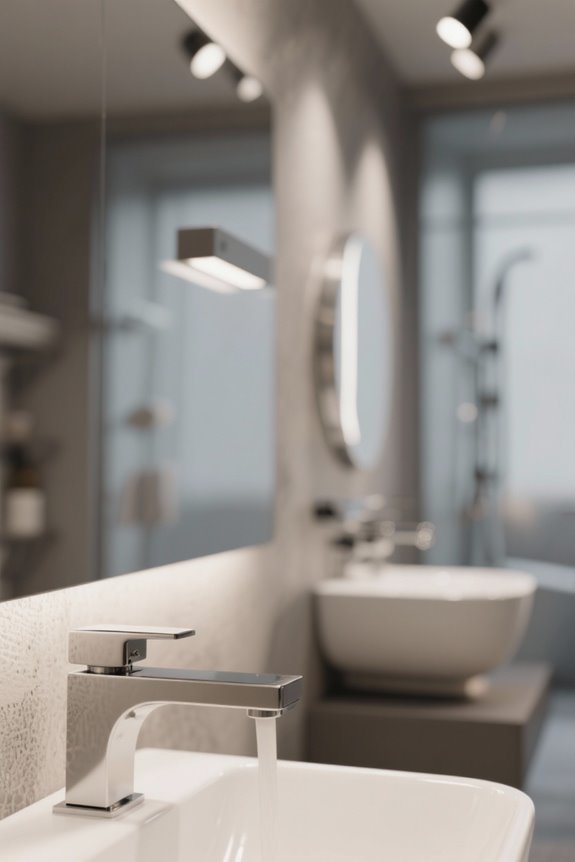
Selecting the appropriate beam angle is essential for maximizing lighting effectiveness during specific tasks in a bathroom, where both functionality and ambiance play significant roles. For general illumination, a beam angle of 40° to 60° is recommended, providing even light distribution throughout the space. In contrast, task lighting for activities like grooming or makeup application benefits from a narrow beam angle of 20° to 30°, concentrating light on work surfaces for precision. For ambient lighting, wide beam angles of 60° or more create a soft, diffused glow that enhances the bathroom atmosphere. Additionally, to highlight specific objects such as artwork or architectural features, a beam angle of 10° to 15° can produce dramatic focal points, adding visual interest and depth. Dimmable LED fixtures offer the flexibility to adjust brightness, catering to both task and ambient lighting needs, enhancing the overall functionality and mood of the space.
Recommended Products

Can be mounted as an uplight or downlight


ABEL BATHROOM VANITY WALL LIGHT DIMENSIONS: 10" High x 39" Wide x 5" Deep; Backplate: 7.88" x 4.5" x 1"; Weight: 8.7 lbs.
Factors Influencing Beam Angle Selection

When evaluating beam angle selection for bathroom fixtures, several factors come into play that can markedly affect both functionality and aesthetics. The typical beam angle ranges from 30° to 60°, with higher ceilings often requiring a wider beam angle to guarantee sufficient coverage. In larger bathrooms, a wide beam angle provides even illumination, while smaller areas can benefit from a narrow beam angle for focused task lighting, such as grooming or applying makeup. The presence of reflective surfaces, like tiles and mirrors, enhances light distribution, making careful beam angle selection essential to avoid glare. Ultimately, the best beam angle will depend on room size and lighting designed to meet specific tasks efficiently while maintaining visual comfort. Additionally, choosing durable materials like SUS304 stainless steel for bathroom hardware can enhance longevity and minimize maintenance in humid environments.
Recommended Products
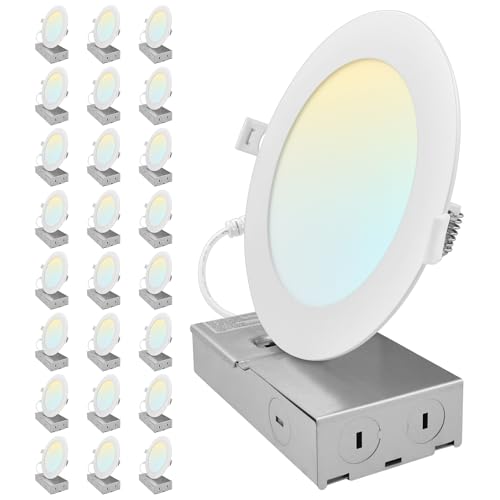
5 Color Temperature Options: Customize your lighting with 5 CCT-selectable colors—2700K (Warm White), 3000K (Soft White), 3500K (Neutral White), 4000K (Cool White), and 5000K (Bright White). Featuring a 105° beam angle and CRI 90+ for true-to-life color rendering, this ceiling-mounted LED fixture delivers energy-efficient lighting with 800/1050/1250 lumen brightness options.

✅ DESIGN - ASD 1 inch LED lights come with a durable airtight aluminum housing with excellent heat dissipation, multifaceted specular reflector with a 38° beam angle, anti-glare PC lens, and spring-loaded clips. These down lights for ceiling are designed to operate on 120V circuits with a TRIAC dimmable driver

5 COLOR OPTIONS - Not sure what color temperature to choose for your home recessed ceiling lights? Each LED can light has a simple to use switch that can change your lights to 2700K warm white, 3000K soft white, 3500K natural white, 4000K cool white, or 5000K bright white. Your home recessed lights will be adjustable through 5 color temperatures until you find the one that perfectly suits your space.
Ceiling Height Considerations

Ceiling height plays a pivotal role in determining the appropriate beam angle for bathroom lighting, as it considerably impacts how light is distributed throughout the space. Bathrooms with higher ceilings necessitate a wider beam angle, typically over 30°, to guarantee adequate distribution and prevent concentrated illumination in localized areas. For example, homes featuring ceilings of 10 to 12 feet benefit from fixtures with a beam angle of about 40° to enhance light coverage effectively. Conversely, lower ceilings allow for a narrow beam angle, around 20°, which is ideal for directing light precisely, such as above a mirror. Selecting the proper beam angle according to ceiling height is essential for optimizing illumination, minimizing shadows, and guaranteeing functionality in bathroom environments. Additionally, choosing dimmable fixtures can further customize the brightness levels, providing flexibility in how the space is illuminated based on specific needs.
Light Placement Strategies
Effective light placement strategies are essential for achieving ideal visibility and functionality in bathroom spaces, as the arrangement of fixtures can greatly influence how light interacts with various surfaces. For optimal lighting, fixtures should be positioned 36 to 48 inches above the vanity, ensuring light reaches face level. Utilizing a narrow beam angle, approximately 20° to 30°, is beneficial for focused task lighting above mirrors, effectively minimizing shadows during grooming tasks. In contrast, a wide beam angle, 40° and above, fosters efficient lighting in larger areas by ensuring light spreads evenly, eliminating dark corners. Layered lighting, combining ambient ceiling lights with accent fixtures, enhances the space while preventing glare, especially important in wet areas with damp-rated fixtures. It’s advisable to select fixtures made from durable materials like steel or coated metals, as these ensure longevity and resistance to the bathroom’s humid environment.
Narrow vs. Wide Beam Angles: Pros and Cons
Although choosing between narrow and wide beam angles can appear straightforward, understanding the distinct advantages and disadvantages of each is vital for ideal bathroom lighting. A narrow beam angle, typically ranging from 15° to 20°, provides focused illumination that excels in task lighting, making it suitable for grooming activities at bathroom vanities. However, this concentration risks creating glare if fixtures are improperly positioned. On the other hand, a wide beam angle, generally 40° and above, offers broader ambient lighting, effectively distributing light to minimize shadows. Yet, it may prove insufficient for precision tasks, compromising visibility and accuracy. Consequently, selecting the appropriate beam angle in lighting fixtures is critical for achieving a prime balance between task and ambient lighting needs. When considering bathroom lighting, exhaust fans with integrated LED lights offer the dual function of ventilation and illumination, enhancing both design and functionality.
Recommended Products

Integrated Insert Design - This ZLINE wall mount range hood insert is designed to install seamlessly into custom-built cabinetry set-ups, providing professional-grade power without the visible exterior shell

CONTROL YOUR WAY: Caseta smart switches let you control your lights your way: from the wall, with the free Lutron app, or using your voice. Easily set schedules or activate scenes with the touch of a button (Caseta Smart Hub required)

HIGH-QUALITY FAN: Quiet, ENERGY STAR certified exhaust fan operates with 110 CFM to help control air quality is powerful enough for rooms (including bathroom) up to 105 sq. ft.
Enhancing Ambiance With Proper Lighting
Creating a welcoming atmosphere in a bathroom relies greatly on the appropriate use of lighting, which not only serves a functional purpose but also enhances the overall aesthetic of the space. Proper lighting typically utilizes a beam angle between 30° to 45° to balance focused task lighting and soft ambient illumination. Fixtures with narrow beam angles, ranging from 15° to 25°, are effective for accentuating mirrors and vanities, delivering concentrated illumination without harsh glare. Conversely, wider beam angles above 45° provide general illumination, brightening larger bathrooms. Additionally, incorporating fixtures with adjustable beam angles offers versatile lighting solutions tailored for varying activities, effectively enhancing both functionality and ambiance, while maintaining an ideal lumen output of 500 to 700 lumens per fixture.
Balancing Light Intensity and Coverage
In order to achieve ideal lighting in a bathroom, it is vital to balance light intensity and coverage, which can greatly influence both functionality and aesthetics. A medium beam angle of 25° to 40° is recommended for even illumination, effectively reducing harsh shadows. For larger bathrooms, a wider beam angle of 40° or greater guarantees uniform light coverage. Conversely, when focusing on specific areas like mirrors, a narrower beam angle around 20° produces the high light intensity needed for grooming tasks. Importantly, the lumen output should also be considered; achieving around 200-300 lumens per square meter is best for adequate brightness. This balance between beam angle and light intensity is critical in creating efficient bathroom lighting. Additionally, consider using energy-efficient E26 sockets to enhance lighting control and ensure the longevity of your bathroom fixtures.
Best Practices for Bathroom Lighting Design
Effective bathroom lighting design entails a careful combination of various light sources, ensuring both safety and functionality, essential for tasks like grooming. Utilizing multiple light sources such as sconces and overhead fixtures helps achieve uniform brightness throughout the space while eliminating dark corners. A medium beam angle of 30° to 40° offers adequate illumination, minimizing harsh shadows during grooming activities. To enhance versatility, consider installing dimmable fixtures, allowing users to adjust light levels based on the specific activity, whether for relaxation or detailed grooming. Aim for total levels of 80-100 lumens per square foot, while warm white bulbs (2700K to 3000K) create a cozy ambiance, ensuring accurate color representation during tasks like shaving or makeup application. Dimmable bulbs for customizable lighting offer flexibility in adjusting brightness to suit different moods and activities.
Recommended Products

[Dimmable & 3-Color LED Bathroom Mirror] Touch screen control, three color temperatures, 3000K-6000K, in order of warm light, natural light, and white light. And the brightness of the light can be adjusted from 10%-100%, with memory function, no need to adjust the brightness each time.

【Beveled Edge Design & Easy Care】 Defying traditional mirror design, this piece features beveled edges on both the frame and glass for a distinctly sleek look. A subtle gap creates a floating, 3D visual. The rust-proof aluminum frame with a brushed nickel finish offers a smooth, touch-friendly surface that is incredibly easy to clean

Eight RGB Backlit and Three Front-lit: Istripmf LED bathroom mirror is equipped with both front lighting and rgb backlights. Front light provides ample lighting for daily grooming tasks, rgb backlights create a relaxing ambiance in the bathroom
Choosing the Right Fixtures for Your Needs
When selecting bathroom fixtures, it is essential to contemplate various factors such as beam angle, lumen output, and design to guarantee that the lighting meets specific needs for both aesthetics and functionality. A beam angle of 40° to 60° is recommended for general illumination, providing adequate light coverage without harsh shadows. For focused task lighting, narrow beam angles under 20° spotlight mirrors or accentuate design features effectively. Fixtures with adjustable beam angles enhance versatility, adapting light for activities like grooming or relaxing in a tub. Opting for LED lights with a high lumen output between 500-800 lumens guarantees bright light, enhancing functionality while maintaining a comfortable atmosphere. Combining multiple fixtures with varying beam angles creates a layered lighting effect, improving overall bathroom aesthetics. For smaller spaces, consider mini chandeliers as they provide an elegant and compact lighting solution, perfect for areas with limited room.
Recommended Products

6 Inch Slim LED Downlight with Junction Box and Smooth Trim

【Specifications】UL listed. 29 1/2" wide x 12" high. Oval wall plate is 8" wide x 4 1/2" high. Each glass shade is 5 1/4" high. Extends 8" from the wall. Uses four maximum 60 watt standard-medium base bulbs (not included).

High Quality - These bathroom sconces feature a brass frame with anti-oxidation coating that resists rust and fading. The transparent glass body offers a 360° beam angle, brightly illuminating every corner
Frequently Asked Questions
What Materials Work Best With Various Beam Angles?
A study highlighted how a narrow beam angle paired with reflective surfaces enhanced lighting in a gallery. Fixture design compatibility must account for light diffusion factors, color rendering effects, and installation surface considerations to optimize energy-efficient options and minimize shadow effects.
Can Beam Angle Affect Energy Consumption?
Beam angle efficiency greatly influences light distribution impact and can lead to energy cost savings. Proper fixture placement strategies and ideal wattage selection, along with bulb type influence, are essential in today’s lighting design trends and environmental considerations.
How Do I Measure Beam Angle?
To measure beam angle, one must consider beam width measurement, fixture height considerations, and room size factors. Light distribution patterns, ceiling height effects, and surface reflections impact the luminous interplay, influencing overall lumen output in varied settings.
Are There Standard Beam Angles for Bathroom Fixtures?
Standard bathroom fixtures typically feature beam angles ranging from narrow to wide; lighting design considerations influence their choice. Knowledge of beam angle measurement aids in fixture positioning strategies, impacting bathroom ambiance and illumination intensity effects. Bulb selection criteria further refine aesthetic lighting solutions.
Can I Adjust Beam Angle After Installation?
Adjusting beam angles after installation often resembles trying to redirect a river’s flow. Despite beam adjustment methods, fixture compatibility considerations and design limitations pose challenges, complicating the quest for ideal lighting solutions and effective maintenance practices.


