As an Amazon Associate, we earn from qualifying purchases. Some links on this site are affiliate links at no extra cost to you. Our recommendations are based on thorough research and editorial judgment.


Diffusers and Lenses: Softer Light Without Losing Brightness

Lenses and diffusers are essential for achieving softer light without sacrificing brightness. Prismatic lenses bend light for enhanced diffusion, while opal or polycarbonate diffusers scatter light evenly, minimizing shadows and glare. A diffuser thickness of around 3mm is ideal for softness, and larger sizes can further improve distribution. Using materials with high light transmission rates guarantees that brightness is maintained. Incorporating these elements skillfully can optimize illumination quality, making spaces more visually comfortable and efficient, revealing deeper insights along the way.
Key Takeaways
- Combining lenses and diffusers optimizes illumination by directing light while ensuring uniformity across surfaces, enhancing overall light quality.
- Prismatic or opal diffusers scatter light effectively to minimize harsh shadows and glare without significantly diminishing brightness.
- Utilize durable polycarbonate materials for diffusers to maintain high light transmission rates and clarity for softer illumination.
- Ideally, choose thicker diffusers (around 3mm) and larger surface areas to achieve a balance between softness and brightness.
- Incorporating reflective surfaces, such as aluminum, can redirect light, enhancing illumination quality while preserving brightness in the space.
Understanding the Role of Lenses in Light Distribution
Lenses play an essential role in the distribution of light, effectively shaping how illumination is perceived in various environments. Clear or prismatic lenses markedly influence light distribution; prismatic lenses enhance diffusion and brightness control by bending light rays, ensuring even illumination. The shape of lenses—whether convex or concave—determines the beam angle, allowing designers to control brightness while minimizing light loss. Durable polycarbonate lenses maintain clarity and light transmission efficiency, even in harsh surroundings. By redirecting light rays, lenses effectively reduce glare, improving the overall quality of light and visual comfort in spaces such as offices and retail environments. Their ability to spread light evenly is vital for achieving ideal illumination without compromising brightness levels. Damp-rated fixtures are important for moist environments like bathrooms, ensuring safety and functionality while maintaining the fixture’s longevity.
The Importance of Diffusers in Lighting Applications

Although the primary function of light fixtures is to provide illumination, the importance of diffusers in lighting applications cannot be overstated, as they play a critical role in enhancing visual comfort and aesthetic quality. Diffusers scatter light to create a more uniform light distribution, effectively reducing harsh shadows and glare. By employing materials such as opal glass or polycarbonate, diffusers enhance light scattering properties while maintaining brightness and color accuracy. This balance optimizes lighting design by improving the Unified Glare Rating (UGR) in environments like offices and schools. Some diffuser designs can achieve up to 85% light transmission without considerable loss of brightness, promoting effective light use while ensuring visual comfort in various settings. In bathroom lighting, consider energy-efficient LED bulbs with diffusers to ensure optimal illumination and visual comfort in humid environments.
Recommended Products

RGB WaterGlow LED Lightning Kit : Kasco RGB LED Lighting Systems dramatically illuminates your fountain or surface aerator pattern and add vibrancy to any evening water display with exceptional color options, rhythmic patterns, and musical capabilities. These versatile LED lights are a perfect addition to your display.
RGB WaterGlow LED Lightning Kit : Kasco RGB LED Lighting Systems dramatically illuminates your fountain or surface aerator pattern and add vibrancy to any evening water display with exceptional color options, rhythmic patterns, and musical capabilities. These versatile LED lights are a perfect addition to your display.

Selectable Wattage Options:Easily switch between 30W, 40W, 50W, 60W, and 72W to match your space’s lighting needs. Provides 3750–9000 lumens for bright, efficient illumination, making it perfect for offices, schools, or commercial areas.
How Diffusers Enhance Visual Comfort

Diffusers greatly enhance visual comfort in various settings by creating a smooth and even wash of illumination that minimizes harsh shadows and glare. By effectively scattering light, diffusers improve the quality of light output in environments such as offices and classrooms, reducing the Unified Glare Rating (UGR) and promoting productivity. The choice of diffuser material plays an important role; prismatic diffusers excel in glare control while opal diffusers guarantee uniform illumination. Even with high light transmission rates of up to 85%, they maintain the brightness of LED lights while enhancing overall light quality through the diffusion of light. This soft, diffused light allows for visible textures and details, vital in applications requiring clarity, such as macro photography. For example, in bathrooms, soft close technology enhances comfort by reducing noise from slamming, much like how diffusers minimize glare in lighting.
Recommended Products

✅ THICKER, MORE DURABLE: Made from non-yellowing, shatter-resistant acrylic, these frosted acrylic sheet ceiling light covers feature a sturdy 0.080" thickness—built for clarity, safety, and long-lasting performance.
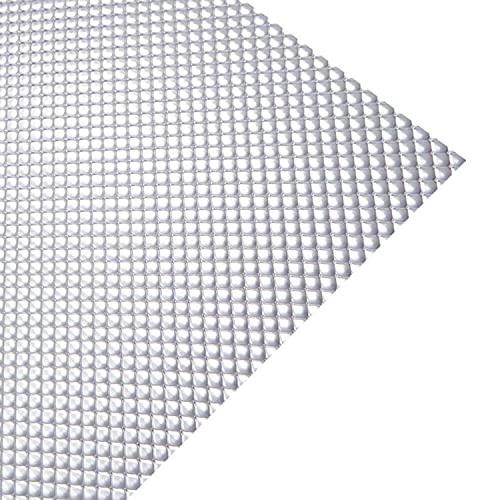
VISUAL COMFORT & EVEN LIGHT DISPERSION: Non-yellowing and shatter-resistant, KASTLITE Prismatic Polycarbonate Lighting Panels offer excellent efficiency and direct glare control and are the ideal choice to create visual comfort in environments lit by overhead fluorescent lighting fixtures. These heavy duty panels feature an embossed design that guarantees perfectly-even light dispersion across any large area or room.

Package Contents – Includes twenty clear extruded prismatic acrylic panels, each 22.5"x46.5" with 0.100-inch thickness. These 2x4 non-yellowing, break-resistant replacement light covers are ideal for overhead fluorescent fixtures in offices, schools, and classrooms, restoring brightness and reducing glare for a refreshed, modern look.
Techniques for Combining Lenses and Diffusers

Effective light control is achieved by skillfully combining lenses and diffusers, which work together to enhance illumination quality while minimizing glare. Lenses can shape light beams to direct illumination more precisely, while diffusers scatter light to guarantee uniformity across a surface. By selecting prismatic or textured lenses in conjunction with diffusers, designers can optimize light distribution, maintaining brightness and reducing harsh shadows. Employing sound optical design principles helps harmonize the lens shape with diffuser material, effectively mitigating hotspots. In addition, adjusting the distance between lenses and diffusers fine-tunes light diffusion; positioning them closer can generate softer light effects, while increased separation enhances overall light spread, ensuring that the resulting illumination is both soft and efficiently functional. Additionally, using ENERGY STAR certified models in lighting fixtures can significantly reduce energy consumption while maintaining effective performance.
Recommended Products

Equivalent to a 2-lamp fluorescent 4ft wraparound fixture

🌓 3CCT Selectable Color Temperatures - Match Any Mood: Instantly switch between 3000K (Warm White), 4000K (Natural White), and 5000K (Cool White) via the toggle switch. Ideal for kitchens (5000K), living rooms (4000K), and bedrooms (3000K) with Ra≥85 color rendering

[Opening Width Determines Fit] Opening width dimension is crucial for fit! Please measure clip to clip/opening width on your old diffuser to determine size needed.
Practical Tips for Implementing Diffusers and Lenses

When planning to implement diffusers and lenses in lighting designs, several practical tips can greatly enhance overall light quality and distribution. Diffusers are available in various materials, with opal and prismatic textures commonly used to balance diffusion and brightness; opal can reduce light output by 40%. To distribute light uniformly and avoid hot spots, larger diffusion materials or concave-shaped diffusers are recommended. Additionally, incorporating parabolic lenses can provide glare control by focusing light effectively, ensuring visual comfort. For ideal softness, a diffuser thickness of around 3mm is advisable. Finally, combining these diffusers with reflective surfaces, like aluminum, can redirect light coming from the fixture, enhancing illumination while maintaining soft light quality without excessive glare. When selecting lighting fixtures, E26 bulb compatibility is essential for enhanced illumination and energy efficiency.
Frequently Asked Questions
Does Diffusing Light Decrease Its Intensity?
Like morning fog softening a sunrise, diffusing light generally decreases its intensity. The diffusion effects scatter light, impacting brightness and requiring careful selection of material properties and photography techniques to maintain desired visual aesthetics and intensity control.
How to Get Soft Diffused Light?
To achieve soft diffused light, one can employ soft light techniques, utilize light diffusion methods like softboxes, explore artificial light options, and adjust ambient light effects, enhancing color temperature in creative lighting setups for photography.
Do Diffusers Reduce Lumens?
Diffusion materials subtly embrace light, enhancing visual comfort. However, this embrace results in diminished lumens; light transmission varies among diffuser types, affecting brightness comparison and intensity control, which photographers must skillfully navigate for peak optical effects.
What Is the Difference Between a Lens and a Diffuser?
A lens, utilizing various lens types and coatings, focuses light through specific focal lengths. In contrast, a diffuser, employing diverse materials, promotes light scattering, softening illumination, ideal for softbox designs and creative photographic lighting setups.


