As an Amazon Associate, we earn from qualifying purchases. Some links on this site are affiliate links at no extra cost to you. Our recommendations are based on thorough research and editorial judgment.


Common Bathroom Lighting Mistakes and Fixes

Common bathroom lighting mistakes include relying on a single overhead light, which creates shadows and insufficient brightness for grooming tasks. Vanity lighting should be mounted at eye level, ideally 6 to 7 feet above the floor, to guarantee even illumination. Ignoring natural light limits ambiance, while improper color temperature can affect relaxation and task performance. Incorporating dimmers, independently wired circuits, and well-placed fixtures enhances functionality. Discover additional critical insights to improve your bathroom lighting efficiency and aesthetics.
Key Takeaways
- Relying solely on one overhead light can cause shadows; incorporating layered lighting solutions improves brightness and functionality for grooming tasks.
- Ensure vanity lights are mounted at eye level (6-7 feet) to provide even illumination and minimize harsh shadows during grooming.
- Neglecting natural light can diminish ambiance; utilize sheer treatments and balance it with artificial lighting for a well-lit space.
- Choose bulbs with a color temperature of 2700K to 3000K for a warm environment; avoid lights above 4000K to prevent harshness.
- Prioritize safety by selecting fixtures with appropriate IP ratings for moisture areas and consider independent circuits for enhanced functionality.
Using Just the One Type of Light
In many bathrooms, a single overhead light fixture, such as a standard downlight, is often the only source of illumination. This reliance on one light source can lead to inadequate brightness, creating a difficult environment for daily grooming tasks. The overhead light casts shadows that can complicate activities like shaving or applying makeup. To improve visibility and reduce discomfort, layering different types of lighting, such as ambient, task, and accent lighting, is recommended. Integrating vanity lights around mirrors can provide essential task lighting, while flexible lighting options grant better control over brightness levels. This balanced approach addresses dark spots and enhances the bathroom’s overall functionality, promoting efficient use of the space and ensuring a more pleasant daily routine. Selecting an exhaust fan with an integrated LED light can further enhance bathroom lighting, providing both ventilation and illumination.
Installing Your Vanity Lighting Incorrectly

Proper installation of vanity lighting is essential for achieving the desired illumination and functionality in a bathroom. Ideally, vanity lighting should be mounted at eye level, approximately six to seven feet above the floor, ensuring even illumination while minimizing shadows. Incorrect placement can lead to significant challenges, such as uneven lighting that complicates grooming tasks like shaving or applying makeup. Instead of relying solely on overhead lighting, which often casts unflattering shadows, it is advisable to install sconces on either side of the mirror. This layered approach enhances lighting needs, provides flattering light, and improves the overall aesthetic appeal of the vanity area, thereby creating a practical and visually pleasing environment for personal care activities. When choosing fixtures, prioritize energy-efficient LED bulbs with a high Color Rendering Index (CRI) to ensure the best illumination quality.
Recommended Products

Unique Design: Sawyer Large Single Tier Open Air Chandelier brings traditional charm with a modern flair ideal for enhancing your indoor or outdoor living spaces

72``Ceiling Fan from the Windmill collection

60``Ceiling Fan from the Windmill collection
Ignoring Natural Light

Natural light plays an essential role in the overall functionality and ambiance of a bathroom, yet it is often overlooked during the design process. Ignoring natural light can lead to an overreliance on artificial lighting, resulting in increased energy costs and discomfort from over-illumination. Effective bathroom lighting design should include sheer window treatments, enabling soft natural light to filter in while maintaining privacy. In addition, incorporating dimmable fixtures allows homeowners to adjust the lighting based on the available natural light, ensuring a comfortable environment. Planning for a balance between natural and artificial light sources is critical, as it prevents poor lighting conditions at different times of the day, creating a versatile space suitable for various daily tasks and enhancing the overall user experience. For a touch of elegance in your bathroom, consider adding mini chandeliers for small spaces to enhance the decor and provide a sophisticated sparkling effect.
Choosing the Wrong Color Temperature

How does the choice of color temperature impact the atmosphere within a bathroom? Selecting the wrong color temperature can detrimentally affect both mood and functionality. Ideal bulbs typically range from 2700K to 3000K, creating a warm and inviting environment suitable for daily grooming or skincare tasks. Conversely, lights above 4000K produce a harsh environment, rendering the space unwelcoming and potentially inducing discomfort. A 3000K temperature strikes a balance, offering a bright yet cozy glow, essential for tasks like makeup application. Additionally, excessively cool lighting, exceeding 6000K, mimics clinical sterility, counteracting relaxation. Properly choosing color temperature not only enriches ambiance but guarantees accurate color representation for personal care activities, enhancing user experience while maintaining practicality. Moreover, LED fixtures typically last 15,000 to 50,000 hours, providing long-term energy efficiency and reduced waste over time.
Recommended Products

1,ENERGY SAVING - This 2' x 4' recessed drop ceiling light use high-quality LED beads with high luminous efficiency 130LM/W, this 70w led light panel can provide ultra bright 9100lm lighting for you, it can replace the traditional 280W fluorescent lamps, which will help you saving 80% of your electricity bill and carbon emissions.

Unique Natural Alabaster: The dining room chandelier is made of unique natural Spanish alabaster. Each piece is carefully selected and hand-polished, with unique natural textures and color changes, forming beautiful patterns like clouds, giving each lamp a unique artistic feel.

Raindrop Modern Chandelier: Our pendants light fixture features smoke cut crystal and round canopy in brushed brass which is perfect for foyer, hallway, staircase, living room, loft, villa and hotel.
Forgetting About Dimmers

While a well-designed bathroom lighting scheme often hinges on the right fixtures and color temperature, neglecting to incorporate dimmers can lead to a missed opportunity for customization and versatility. Dimmers provide flexibility in controlling light intensity, which allows homeowners to tailor the ambiance according to the specific activity or mood. This is particularly important in multifunctional spaces like bathrooms, where relaxing activities such as baths benefit from softer light. Additionally, dimmers enhance energy efficiency by reducing brightness and energy consumption when full illumination isn’t necessary. They also facilitate gradual shifts of light, contributing to overall comfort and functionality. An affordable upgrade, dimmers considerably improve the daily bathroom experience by accommodating varying natural light throughout the day. It’s also important to ensure that the bathroom light fixtures are moisture resistant for durability and safety, especially in areas prone to humidity.
Recommended Products

Premium Materials: Made from anodized aluminum, the WELLFOR 60"x30" LED medicine cabinet (Three doors opening) features a waterproof, copper-free silver mirror and a tempered glass back for safety and style.

【Backlit+Front-lit, Double Lighting Sources】: loaao led bathroom mirror is designed with both backlight and front light; Double lighting sources designed to make the mirror bright enough for doing makeup; skin care; shaving and dressing up; Super bright

ULTRA-QUIET BLUM 170° SOFT-CLOSE HINGES: Say goodbye to slamming glass. Featuring premium Austrian-made BLUM hinges, this luxury medicine cabinet recessed unit provides a whisper-quiet close every time. These architectural-grade hinges ensure your double door LED medicine cabinet stays perfectly aligned and sag-free for life, outperforming cheap generic hardware found in basic models.
Ignoring Safety and IP Ratings
Bathroom lighting is not only about aesthetics and functionality; safety considerations play a vital role in securing a safe environment. Ignoring IP ratings can lead to significant safety risks since electricity and water often coexist in bathrooms. Lighting fixtures in damp areas should possess at least an IP44 rating to guarantee water-resistance and safeguard against electrical hazards. In Zone 0, particularly within baths or showers, fixtures require a minimum IP67 rating to endure complete immersion in water. Utilizing lighting fixtures with lower IP ratings in high-moisture environments increases the potential for shocks, emphasizing the importance of understanding and adhering to IP guidelines. This knowledge guarantees safe installations that effectively manage moisture exposure, thereby enhancing overall safety in bathroom lighting. Additionally, choosing damp-rated options ensures that lighting fixtures are safe and effective in wet environments, as these options are specifically designed to withstand humidity and moisture exposure.
Recommended Products

💡【Edge-Lit Innovation Full Mirror Premium Glow】Unlike central-strip designs that reduce usable mirror area, our outer-edge sandblasted frosted LED strip maximizes mirror space for clear, unobstructed grooming. More decorative than lamp-shaded styles, it maintains elegant aesthetics when lit or off. To address the common dimness issue in sandblasted strips, we widened it to 1 inch—delivering both premium aesthetics and bright, cozy bathroom lighting in one.

Brighter & Energy-Saving – Equipped with a high-density, UL-listed waterproof LED strip (120 LEDs/meter, CRI>90), combined with high light transmittance (>95%) acrylic lamp cover, it delivers a lighting experience that achieves both energy efficiency and brightness with lower wattage.

【Backlit & Frontlit】 The Keonjinn updated LED mirror features two high-density light strips that provide both ultra-bright front light and back light. With the upgraded UL/FCC listed LED driver, you can turn on only the backlight independently as an ambient light, or only the front light to save energy.Get three styles of mirrors at once.
Running Every Light Off the Same Circuit
When all bathroom lights are connected to a single circuit, it often restricts flexibility and control, making it difficult to achieve various lighting moods for different tasks or times of day. Implementing independent circuits for general, vanity, and accent lighting enhances the overall functionality of the lighting scheme. A well-planned setup typically features at least three circuits, allowing for adjustable lighting levels tailored to user preferences, whether for energetic mornings or relaxing showers. This approach minimizes the risk of over-illumination, facilitating essential mood adjustments that enhance the bathroom experience. By managing wiring and circuit placement during renovations, homeowners can avoid future complications while ensuring a visually appealing and effective lighting arrangement that meets diverse needs and activities. Additionally, incorporating moisture-resistant features in your bathroom lighting can prevent damage in high-humidity environments, ensuring the longevity and performance of your fixtures.
Installing Downlights in a Grid
Although many homeowners may opt for installing downlights in a grid formation due to its perceived simplicity, this approach often results in bland illumination that fails to enhance the bathroom’s overall ambiance. Instead of uniform placement, homeowners should strategically locate downlights to target areas requiring more illumination, such as over the sink or shower. This enhances functionality and promotes a balanced lighting design. To create visual interest and usability, it is important to incorporate various light sources, including task lighting and accent lighting, which can prevent a flat illumination scheme. Proper planning based on the overall bathroom layout guarantees effective light distribution, creating a dynamic environment that avoids dead spots and elevates the space’s aesthetic appeal. Consider selecting energy-efficient options, like those with Energy Star certification, to not only improve lighting but also save on energy costs over time.
Recommended Products

✅ DESIGN - ASD LED trimless recessed lighting has a twist-lock design and includes a round mud frame to be plastered over, giving it a smooth trimless look. Our 2 inch recessed LED lights have a durable airtight aluminum housing, multifaceted specular reflector with a 38° beam angle, and anti-glare PC lens. These down lights for ceiling are designed to operate on 120-277V circuits with a 0-10V dimmable driver
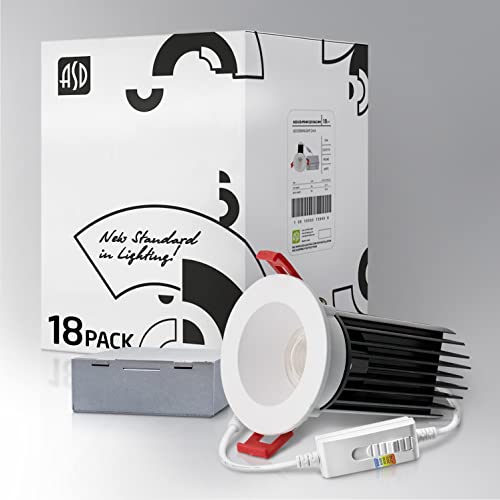
✅ 5 COLOR TEMPERATURES & DIMMING - These 120-277 V 2 inch recessed LED lights with smooth reflector are CCT adjustable, letting you set it to 2700K, 3000K, 3500K, 4000K or 5000K with a simple switch. Dimming (100%-10%) allows you to adjust the brightness without flicker and noise

✅ DESIGN - ASD LED trimless recessed lighting has a twist-lock design and includes a round mud frame to be plastered over, giving it a smooth trimless look. Our 6 inch recessed lights have a durable airtight aluminum housing, multifaceted specular reflector with a 38° beam angle, and anti-glare PC lens. These down lights for ceiling are designed to operate on 120-277V circuits with a 0-10V dimmable driver
Hanging Lighting Too Low
Hanging lighting fixtures too low can create significant challenges in a bathroom’s design, obstructing movement and potentially leading to safety hazards, especially in high-traffic areas like near tubs and showers. The recommended height for hanging light fixtures is approximately 7 feet from the floor to guarantee adequate headroom, thereby enhancing visibility and user comfort. When fixtures are installed too low, they can cast unflattering shadows, complicating tasks such as applying makeup at the vanity. To achieve a balance between aesthetics and safety, homeowners should choose fixtures with shorter drops that still provide adequate illumination for essential activities. Additionally, careful assessment of the bathroom’s layout can prevent conflicts between fixtures and other elements, making certain that functionality remains a priority. Selecting dimmable sconces can also help customize lighting conditions and improve overall bathroom functionality.
Fitting Unflattering Lighting Around a Vanity Unit
Properly fitting lighting around a vanity unit is essential for achieving adequate visibility during grooming tasks, as the right positioning can greatly influence the effectiveness of the lighting. Overhead lights cast unflattering shadows and make makeup application challenging. To combat this, the recommended strategy involves placing fixtures on either side of the mirror, ideally at eye level and about six to seven feet off the ground. This correct placement guarantees even light distribution, minimizing harsh shadows, which are detrimental for personal grooming tasks. For small bathrooms, selecting fixtures under 24 inches is optimal to ensure adequate lighting without overwhelming the space. For larger mirrors, double vanity lights enhance visibility, further improving the overall lighting setup. By adhering to these guidelines, one can create a more functional and flattering lighting environment for daily routines.
Frequently Asked Questions
How to Fix Bad Bathroom Lighting?
To fix bad bathroom lighting, one should consider diverse lighting styles, appropriate fixture placement, the right bulb types with suitable color temperature, and installing dimmer switches to enhance overall bathroom design and functionality.
What Are the Rules for Bathroom Lights?
Bathroom light placement requires strategic artistry, blending layered lighting techniques with thoughtful bulb wattage recommendations. Emphasizing dimmer switch benefits, comparing fixture styles, and exploring energy efficiency options create a harmonious sanctuary for daily rituals and relaxation.
What Is the Common Problem With LED Lights?
Common problems with LED lights include flickering issues, color temperature mismatch, inadequate brightness levels, installation positioning errors, and poor-quality bulbs, all of which can lead to overheating concerns and an unsatisfactory lighting experience in bathrooms.
How to Properly Light a Bathroom?
To properly light a bathroom, one should consider bathroom light placement, ambient light layering, mirror lighting techniques, bulb wattage considerations, and dimmer switch benefits, while selecting light bulbs with a favorable color temperature for comfort and atmosphere.


