As an Amazon Associate, we earn from qualifying purchases. Some links on this site are affiliate links at no extra cost to you. Our recommendations are based on thorough research and editorial judgment.


How Hard Water Reduces Water Heater Efficiency

Hard water, which contains high levels of calcium and magnesium, reduces water heater efficiency by promoting mineral scale buildup inside the tank. This accumulation forces the heater to expend additional energy, increasing consumption by up to 25%. As scale forms, it also encourages corrosion in metal components, leading to potential leaks and a shortened lifespan, typically by about two years. Understanding these effects is essential for maintaining ideal performance and managing costs, further discussed in the following sections.
Key Takeaways
- Hard water leads to mineral scale buildup inside water heaters, reducing thermal efficiency by forcing heaters to work harder.
- Accumulated scale increases energy consumption by up to 25%, raising utility bills for homeowners.
- Corrosion from hard water minerals damages metal components, compromising heater efficiency and lifespan.
- Sediment buildup can cause fluctuating water temperatures and diminished hot water supply during peak usage.
- Regular maintenance and water softening are essential to prevent scaling and maintain optimal performance.
What Is Hard Water?
Hard water is characterized by high concentrations of dissolved minerals, primarily calcium and magnesium, which greatly influence both its quality and taste. These minerals originate from the natural dissolution of soil and rock formations, resulting in varied hardness levels across regions. For instance, cities like Grand Rapids have hardness levels reaching 380 ppm, classified as very hard water, while places like Lansing exhibit much softer water at 99 ppm. Hard water is safe for human consumption but presents challenges for appliances, particularly water heaters and plumbing fixtures. Scale buildup, a common consequence of hard water, can diminish system efficiency and necessitate increased maintenance. In addition, soft water, which lacks these minerals, avoids such inconveniences, making it a favorable alternative for many households. It’s important to consider eco-friendly options when choosing products like soap dish holders, as they can contribute to sustainable living and reduce environmental impact.
The Impact of Hard Water on Water Heaters

Water heaters greatly rely on consistent thermal efficiency to perform their primary function, which is to supply hot water for various household needs. However, the presence of hard water can notably hinder water heaters efficiency as mineral deposits accumulate inside the tank, forming a thick layer of scale. This insulating layer forces heating elements to work harder and longer, ultimately increasing energy consumption by up to 25%. Furthermore, the interaction between hard water minerals and metal components can cause corrosion, leading to leaks and potential failures. Implementing hard water solutions, such as water softening and regular plumbing maintenance, is crucial to mitigate these issues, extend your water heater’s lifespan, and guarantee peak performance, thereby reducing the risk of costly repairs or replacements. Energy-efficient models such as the Rinnai RX199iN can help reduce the energy consumption that results from scale buildup due to their high energy efficiency ratings.
Reduced Efficiency and Increased Energy Costs

A vital concern for homeowners relates to the increased energy costs associated with reduced efficiency in heating systems. Water heaters operating in hard water environments can see energy consumption rise by as much as 25% due to mineral deposits that form scale buildup. This scale insulates heating elements, resulting in prolonged heating times and a direct impact on the water heater’s performance. As a consequence, homeowners may face elevated utility bills because the heater works harder and cycles more frequently. Regular maintenance becomes essential to minimize these effects; otherwise, the operational workload increases, contributing considerably to rising energy expenses. By addressing hard water challenges proactively, homeowners can better manage efficiency and mitigate soaring costs while ensuring reliable heating. Regular inspections and cleaning of solar panels and fixtures are crucial for maintaining the efficiency of solar water heaters, as outlined in recommended maintenance practices.
Corrosion and Shortened Lifespan

While homeowners may not initially consider the impact of mineral-laden water, it considerably contributes to corrosion and a shortened lifespan of water heaters. Hard water contains minerals that accelerate the deterioration of metal components, particularly the heating elements, resulting in frequent breakdowns. Corrosion might reduce the average lifespan of a water heater by approximately two years when compared to those that operate with soft water. As corrosion progresses, it compromises the structural integrity of the tank, increasing the risk of leaks and necessitating costly replacements. Additionally, heightened corrosion leads to increased maintenance costs, which may affect warranties and insurance claims if failures occur. Understanding these factors is essential for homeowners seeking to maintain their water heater’s efficiency and longevity. Homeowners can consider installing powered anode rods to combat corrosion and extend the lifespan of their water heaters.
Signs of Hard Water Damage in Your Water Heater
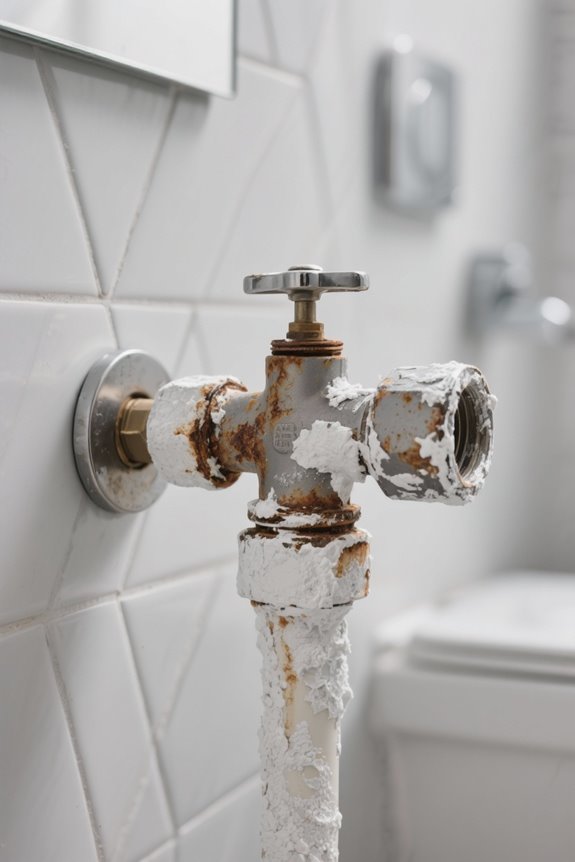
Identifying signs of hard water damage in a water heater is essential for homeowners aiming to maintain ideal efficiency and prolong the unit’s lifespan. Common indicators include rumbling or popping sounds, which suggest mineral accumulation at the tank’s bottom, reducing heating efficiency. A diminished hot water supply during peak usage often stems from mineral deposits obstructing peak performance. Homeowners may also notice fluctuating water temperatures, a symptom of sediment buildup disrupting the heating process. Additionally, rising energy consumption likely results from scaling that forces the heater to expend more energy to achieve desired temperatures. Finally, visible residue around faucets and fixtures points to broader plumbing issues arising from mineral buildup within the water heater itself. Regular maintenance using eco-friendly options can help prevent mineral buildup and ensure efficient operation of the water heater.
How to Prevent Hard Water Damage in Your Water Heater
Preventing hard water damage in a water heater requires regular maintenance and proactive measures to confirm peak performance. Regularly flushing the water heater tank at least once a year helps remove sediment buildup caused by hard water, which maintains efficiency. The anode rod should be checked and possibly replaced every 1-2 years to combat corrosion from mineral deposits, which prolongs the water heater’s lifespan. Lowering the water temperature can also slow the rate of scale buildup, enhancing heating efficiency and cutting energy costs. Installing a whole-house water softener effectively reduces mineral content in the water supply, improving efficiency and reducing wear on the heater. Energy efficiency of modern water heaters can be significantly enhanced by reducing mineral content, contributing to lower energy consumption and prolonged appliance life. Monitoring water quality and scheduling maintenance can further prevent hard water damage and promote ideal operation.
Frequently Asked Questions
Does Hard Water Ruin a Hot Water Heater?
Hard water can indeed ruin a hot water heater through mineral buildup, leading to increased energy costs and reduced heater lifespan. Implementing maintenance tips like sediment removal can help mitigate plumbing issues and enhance appliance longevity.
Why Do Water Heaters Lose Their Efficiency Quicker in Households With Hard Water?
Why do water heaters struggle? In households with hard water, mineral buildup around heating elements incurs efficiency loss. Scale formation and sediment accumulation elevate energy costs, prompting critical maintenance tips to improve water quality and lifespan.
How Often Should I Flush My Water Heater if I Have Hard Water?
In hard water conditions, flushing frequency should be at least every three months to minimize mineral buildup, guarantee maintenance schedule adherence, enhance heater lifespan, and reduce energy costs. Incorporating water softeners aids in scaling prevention and efficiency tips.
How Long Will a Hot Water Heater Last With Hard Water?
Under hard water conditions, a hot water heater’s lifespan may dwindle to merely 6-10 years. Mineral buildup accelerates scaling effects, leading to sediment accumulation, operational costs, and plumbing issues that necessitate prompt maintenance or tank replacement.


